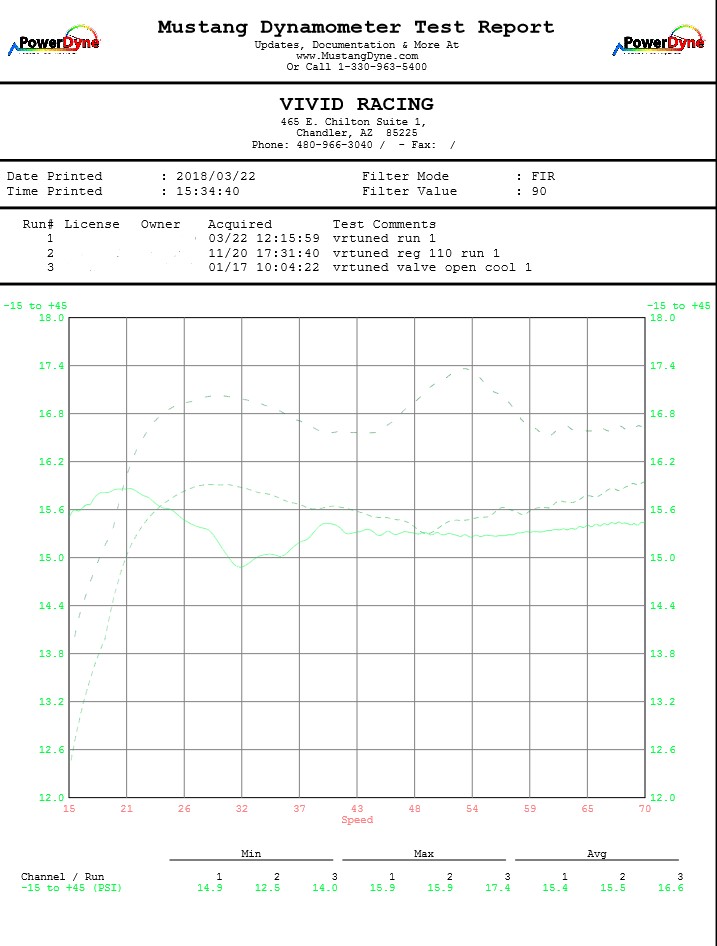
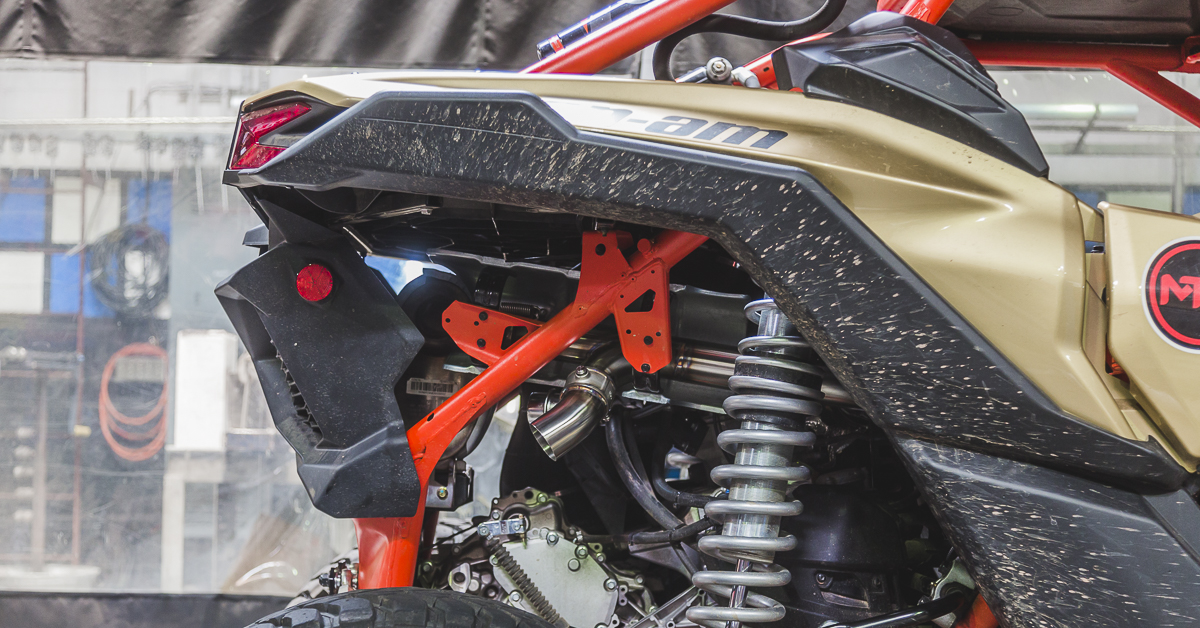
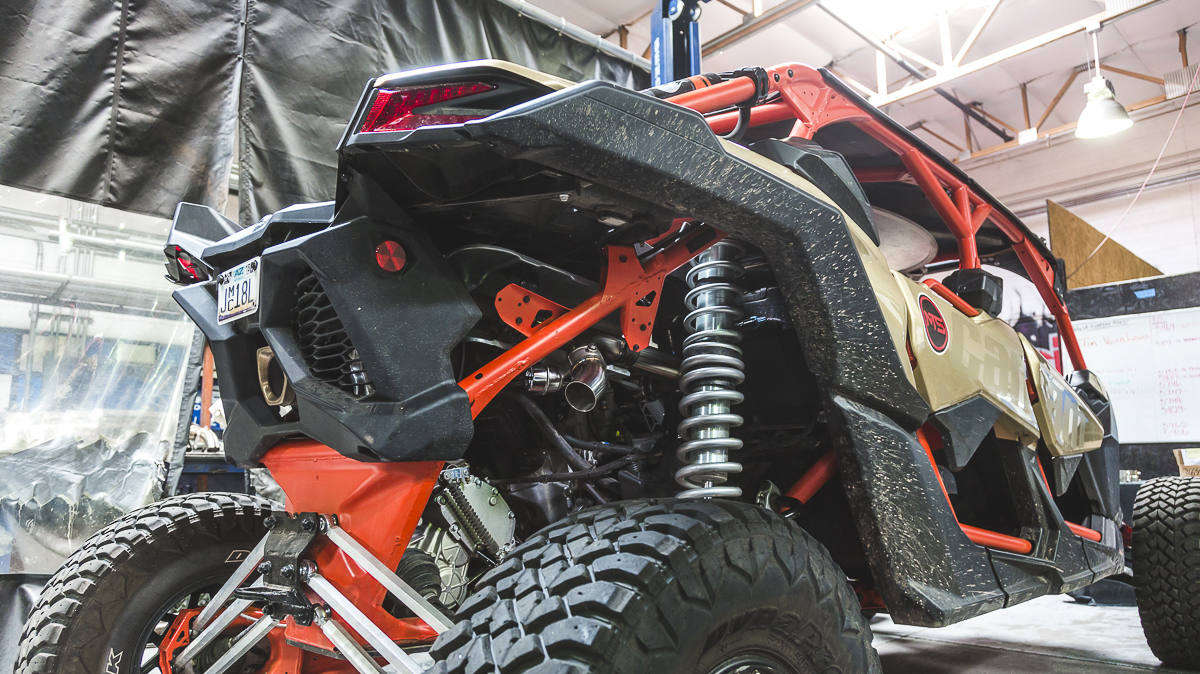
There are many options to choose from when it comes to an exhaust for your Can-Am Maverick X3 Turbo. Between price, style, and sound, most exhausts will do the same for your upgrade desires. However when it comes to performance, there is a different way to look at things. When you do an ECU tune, you set boost pressure parameters in the ECU code. This is typically set to about 17psi instead of the stock 14psi in our VR Tuned ECU flash and as we have tested in others. What the ECU says and what the car will do can differ. Mechanically, you have variables such as the wastegate, blow off valves, and exhaust components. If we focus on the exhaust system, you can see there is some major variance. If 1psi of boost equals 10 horsepower in theory, than this graph and article will show you why the Agency Power valvetronic dump pipe is the best option for your Can-Am X3 Turbo!
Turbochargers do not need any back pressure or restriction. The more air you get in and the more air you get out makes them extremely happy. If you put a simple 3 inch pipe off the turbo exhaust side, it would be happy as hell. However your ears would not be. A turbo is one big air pump and if you put a blockage on the exit of the turbo, it will not perform how it should. Want to see? Grab a hairdryer and put your hand in front of the opening. Hear it about to explode? That back pressure is restricting the flow. However, Can-Am is not building race cars for the masses, they are building vehicles designed for the general population that meet government regulations. With this, restrictions and audible requirements must be met.
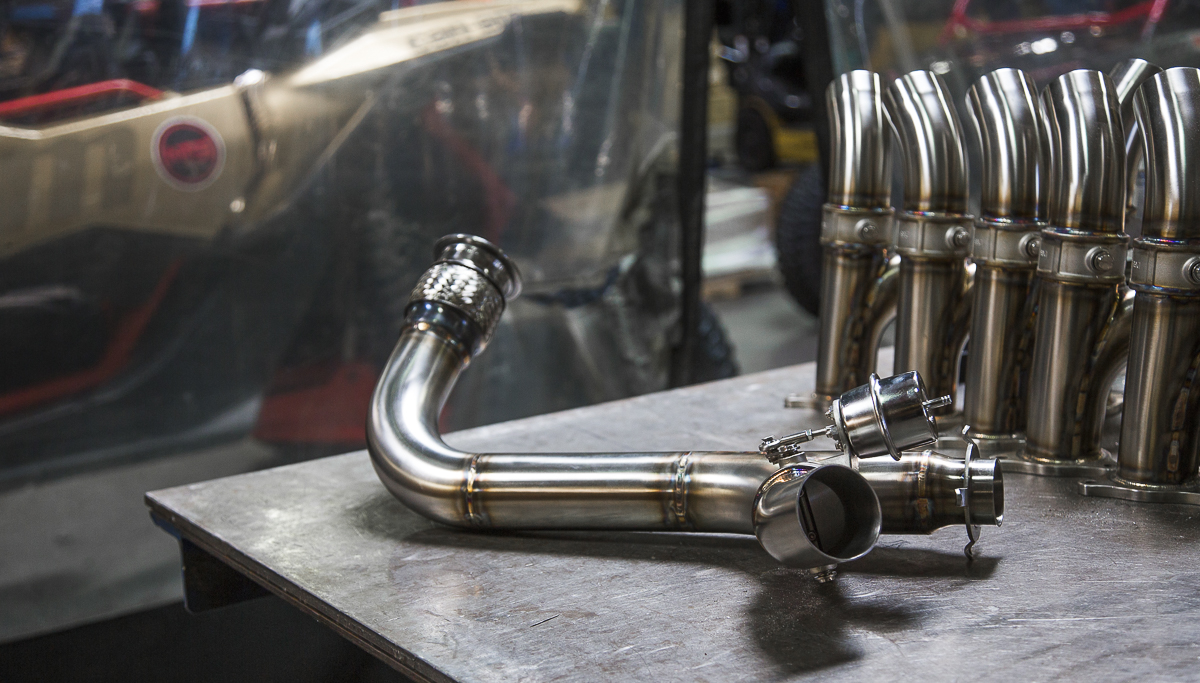
The Agency Power valvetronic race pipe features a valve that is switch operated from inside the cockpit. When the valve is open, the exhaust gases from the turbo goes straight out the dump portion with no restriction or back pressure. This gives a loud race sound that some truly prefer. When it is closed, the exhaust gases go through the now catless pipe and into the stock or aftermarket muffler. This keeps the exhaust tone tame and tolerable for most. By not have a cat for race use, the restriction is eliminated, but not completely. We plotted 3 different boost graphs to show you how the immediate atmosphere dump of the exhaust gases is better than the stock exhaust with a cat delete pipe or with an aftermarket exhaust.
Run #1 is a stock muffler with cat delete pipe that averages 15.4psi
Run #2 is an aftermarket muffler with cat delete pipe that averages 15.5psi
Run #3 is the Agency Power valvetronic dump pipe that averages 16.6psi
Our good friends in Colombia just ran this Chevrolet Camaro SS on the dyno, fully equipped with the brand-new Borla S-Type Exhaust. This muscle car sounds like a beast and performs like one too. You can check out more from out South American partners at http://www.vividracing.com or on Instagram @colombiancars.
BORLA’s Camaro catback exhaust is led by an aggressive high-performance “S†type system (PN:140280) that utilizes patented XR-1 technology from BORLA exhausts used in race-winning Corvettes and other GM champions. The catback system comes complete with an x-pipe for increased flow and a richer sound. Aside from the incredible power, sound and appearance, drivers will also enjoy a significant weight reduction with a BORLA exhaust, shedding as much as 43lbs over the stock weight. This is surely enough to make a difference both at the pump and racetrack.
Like all BORLA exhausts, the Camaro system features durable high-quality austenitic stainless steel construction, patented “power when you want it, fuel economy when you need it†technology, mirror-polished tips and a million-mile warranty.
IPD, also known as Innovative Pro Design has been designing, testing and manufacturing plenums since 2004. Their plenums and thermal blankets are nothing short of top quality, and IPD  has the best dyno proven bolt-on power in the industry. You can check out Vivid Racing’s entire stock of IPD plenums here.
IPD sales manager Greg Martin discusses the topic of heat soak and thermal conductivity with IPD plenums in the video below. He explains the reasoning behind why these plenums do not experience heat soak during driving and racing conditions.
Q:Â Do the cast aluminum IPD Plenums experience “heat soak”?
A: Aluminum has a relatively low thermal mass. It’s capable of heating up quickly but because of its molecular packing configuration it’s not capable of storing much energy. While theoretically it does have a higher thermal mass than plastic, the resulting change in inlet air temperature is minimal. At IPD we pay close attention to the whole package; not only the fluid effects of air flow, but also the thermal and mechanical. Extensive testing keeps our claims honest and we will continue to share data as we improve our product.
Comparing aluminum to plastic. Aluminum no doubt gets hotter faster, but it also gets colder faster. Once the car is parked, the Plenum as well as the entire intake system, experience “Heat Soak”. On the other hand, when the car is being driven the intake air being drawn through the intake system actually cools the Plenum more quickly therefore dropping charged intake air temperatures.
The colder the air traveling through the intake system the higher the increase in horsepower. Cooler air is “denser” air, because cooler charged air carries more potential energy. This increase in energy allows for greater combustion within a given volume, ultimately yielding more power and efficiency.
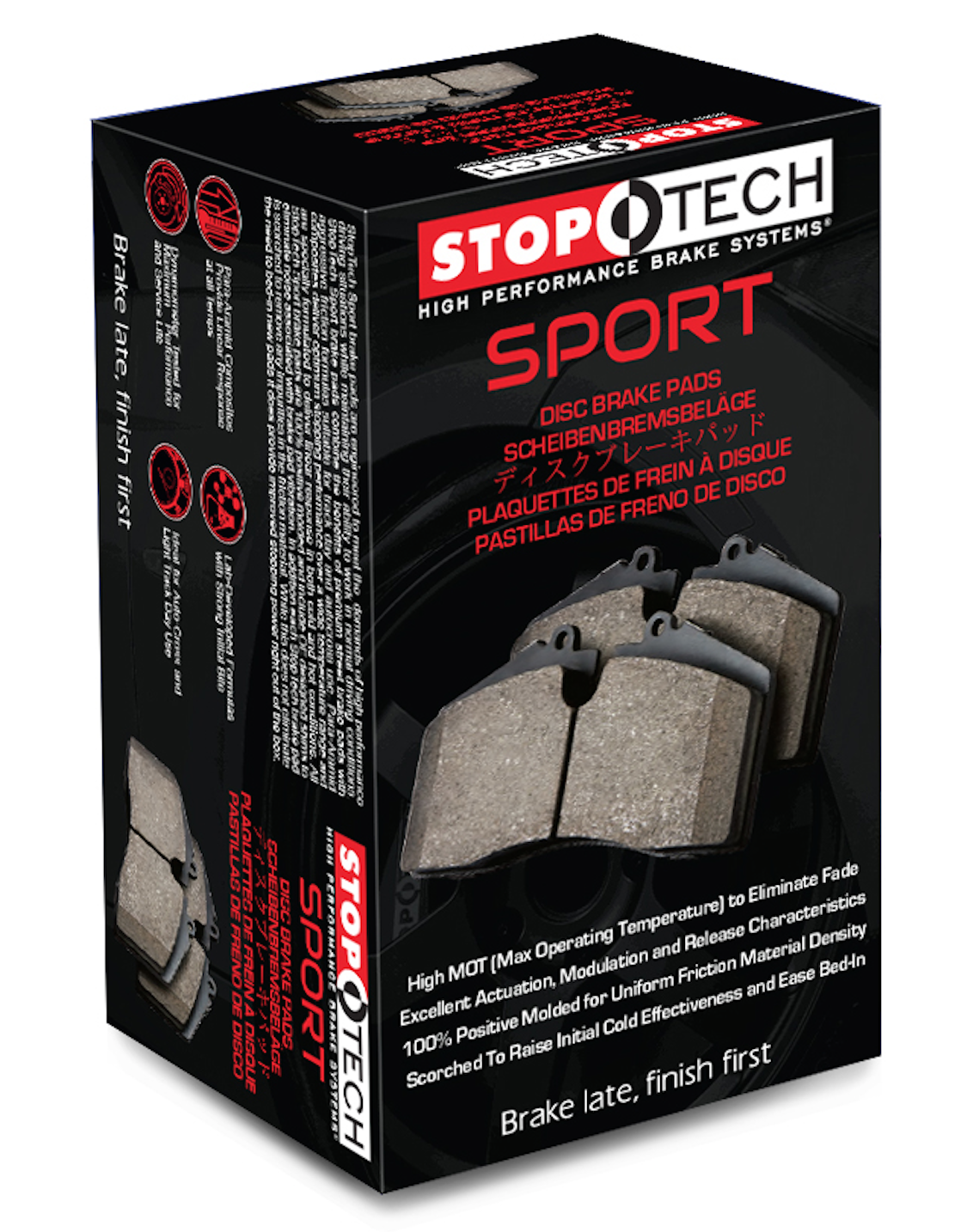
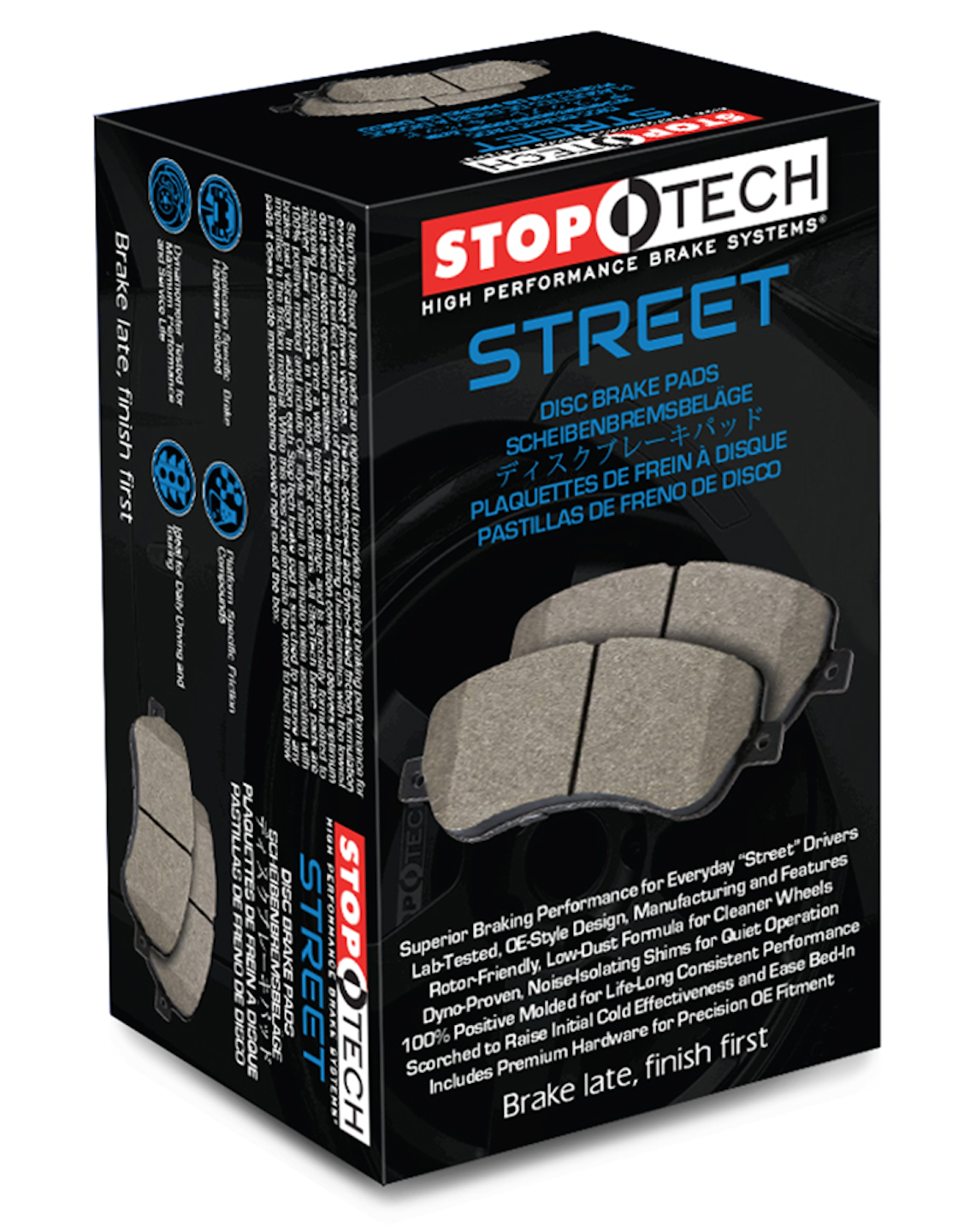
Centric Parts, North America’s leading manufacturer and supplier of OE and aftermarket brake and chassis components, has announced important changes to its high performance StopTech Brake Pad range. This includes the introduction of a new StopTech Street Brake Pad, in addition to a new name for the former StopTech Street Performance Pads, which are now known as StopTech Sport Brake Pads. While both new StopTech brake pad lines offer high performance braking gains, the street pads are intended for road use only, while sport pads are engineered for occasional track duty as well.
StopTech Sport Brake Pad Features:
High MOT (Max Operating Temperature) to Eliminate Fade
Excellent Actuation, Modulation and Release Characteristics
100% Positive Molded for Uniform Friction Material Density
Scorched to Raise Initial Cold Effectiveness and Ease Bed-In
Para-Aramid Composites Provide Linear Response at All Temps
Dynamometer Tested for Maximum Performance and Service Life
Lab-Developed Formulas with Strong Initial Bite
Ideal for Autocross and Light Track Day Use
Formerly known as the StopTech Street Performance Brake Pad, the Sport Brake Pads are engineered to meet the demands of high performance driving situations while maintaining their ability to work in normal driving conditions. These pads combine the benefits of premium street brake pads with aggressive friction formulas suitable for track day and autocross use. Para-Aramid composites deliver optimum stopping performance over a wide temperature range and are specially formulated to deliver linear response in both cold and hot conditions. All StopTech Sport Brake Pads are 100% positive molded and include OE designed shims to eliminate noise associated with brake pad vibration. In addition, each StopTech pad is scorched to remove any impurities in the friction material. While this does not eliminate the need to bed-in new pads, it does provide improved stopping power right out of the box.
StopTech Street Brake Pad Features:
Superior Braking Performance for Everyday “Street†Drivers
Lab-Tested, OE-Style Design, Manufacturing and Features
Rotor-Friendly, Low-Dust Formula for Cleaner Wheels
Dyno-Proven, Noise-Isolating Shims for Quiet Operation
100% Positive Molded for Life-Long Consistent Performance
Scorched to Raise Initial Cold Effectiveness and Ease Bed-In
Includes Premium Hardware for Precision OE Fitment
Application Specific Brake Hardware included
Dynamometer Tested for Maximum Performance and Service Life
Platform Specific Friction Compounds
Ideal for Daily Driving and Touring
The StopTech Street Brake Pads are a new addition to the StopTech product portfolio. StopTech street pads are engineered to provide superior braking performance for everyday street driven vehicles. The lab-developed and dyno-tested friction formulations provide the perfect combination of performance braking characteristics with the lowest dust and quietest operation available. The advanced friction compound delivers optimum stopping performance over a wide temperature range and is specially formulated to deliver linear response in both cold and hot conditions. All StopTech brake pads are 100% positive molded and include OE style shims to eliminate noise associated with brake pad vibration. In addition, each StopTech brake pad is scorched to remove any impurities in the friction material. While this does not eliminate the need to bed-in new pads it does provide improved stopping power right out of the box.
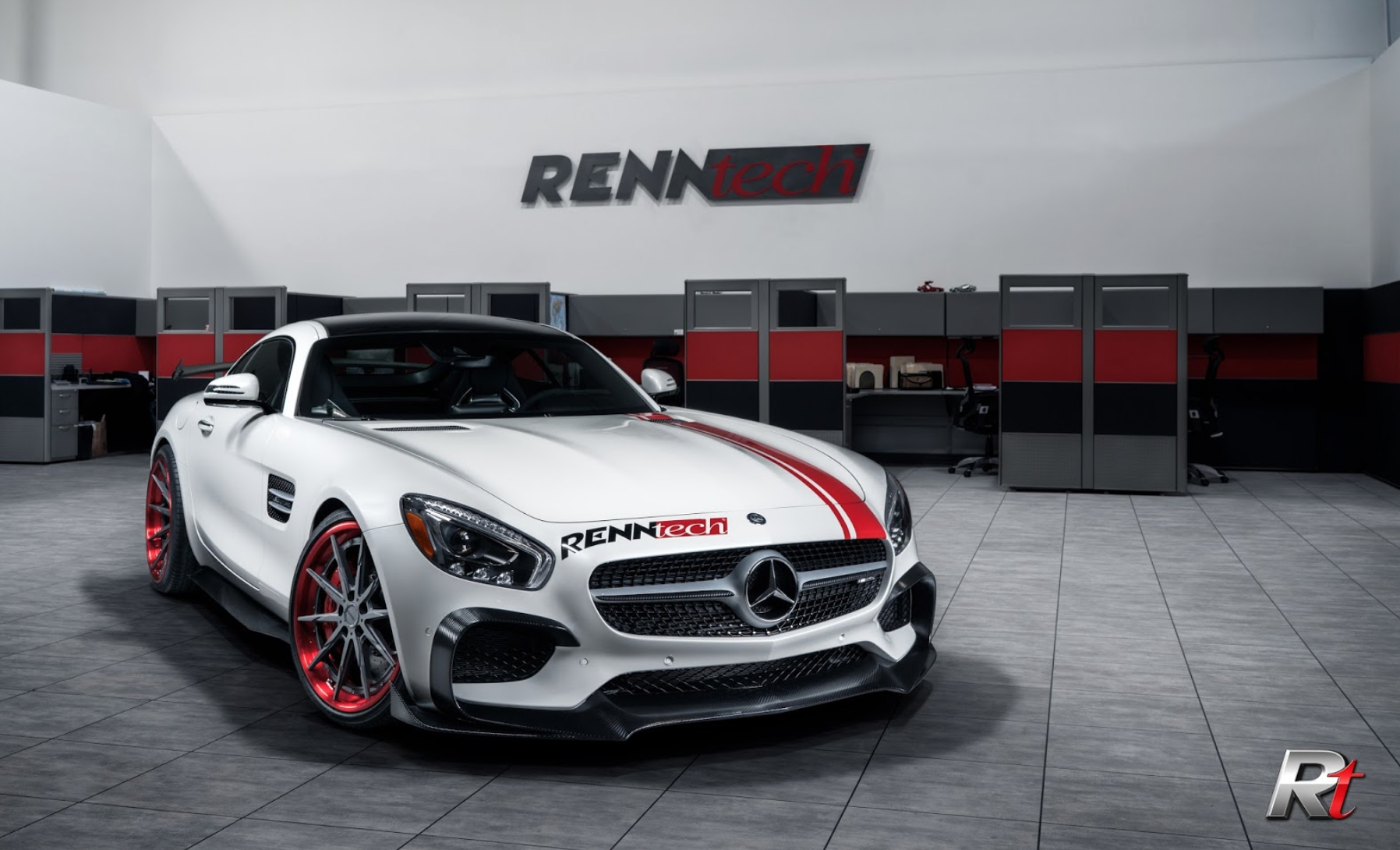
The Mercedes GT-S is the second Mercedes-Benz vehicle fully developed by AMG, the company’s Affalterbach-based performance division and long fabled engine builder. The resulting vehicle is nothing short of spectacular and its 4.0L V8 BiTurbo engine is an incredible platform to build performance upon.
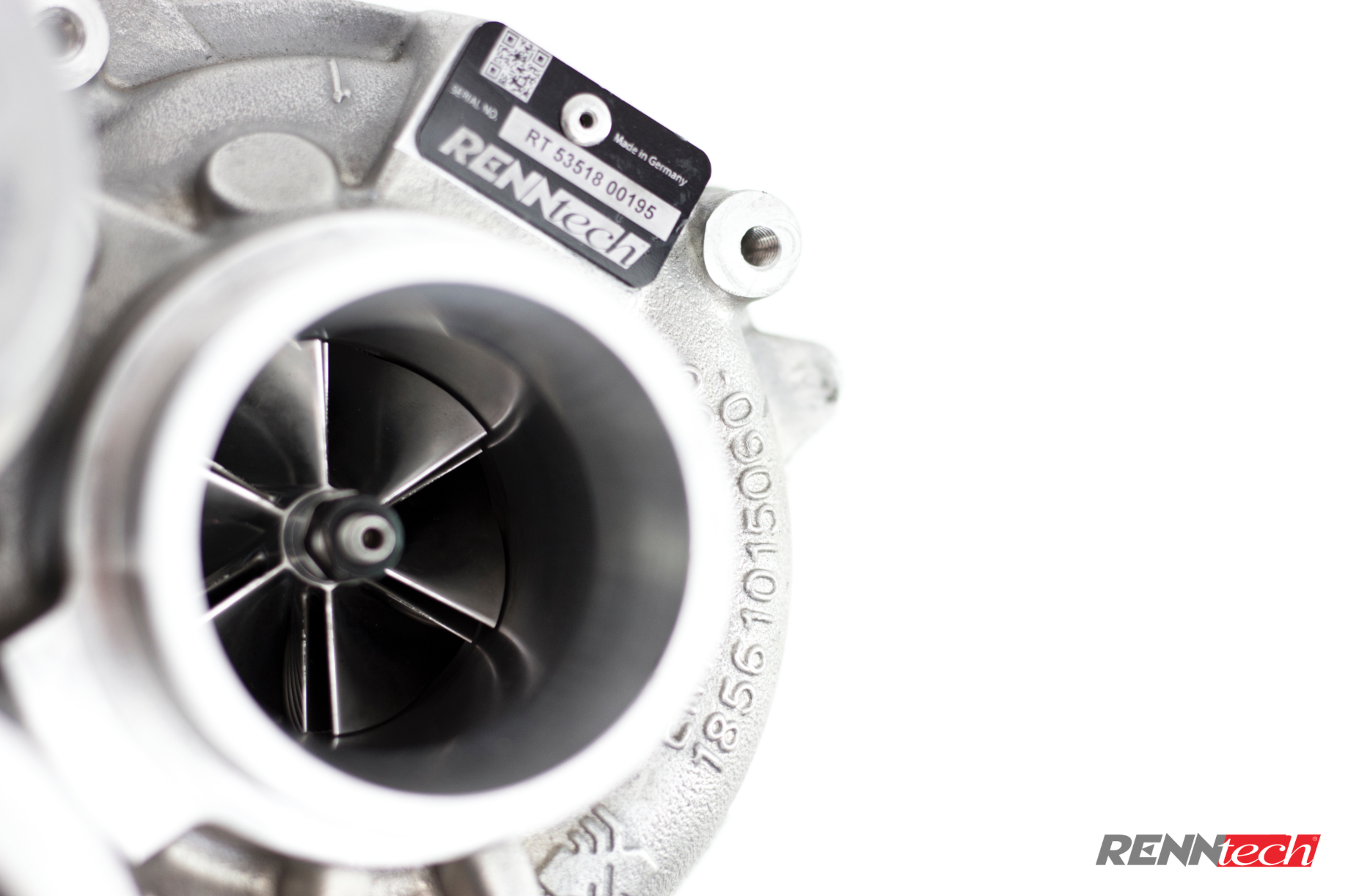
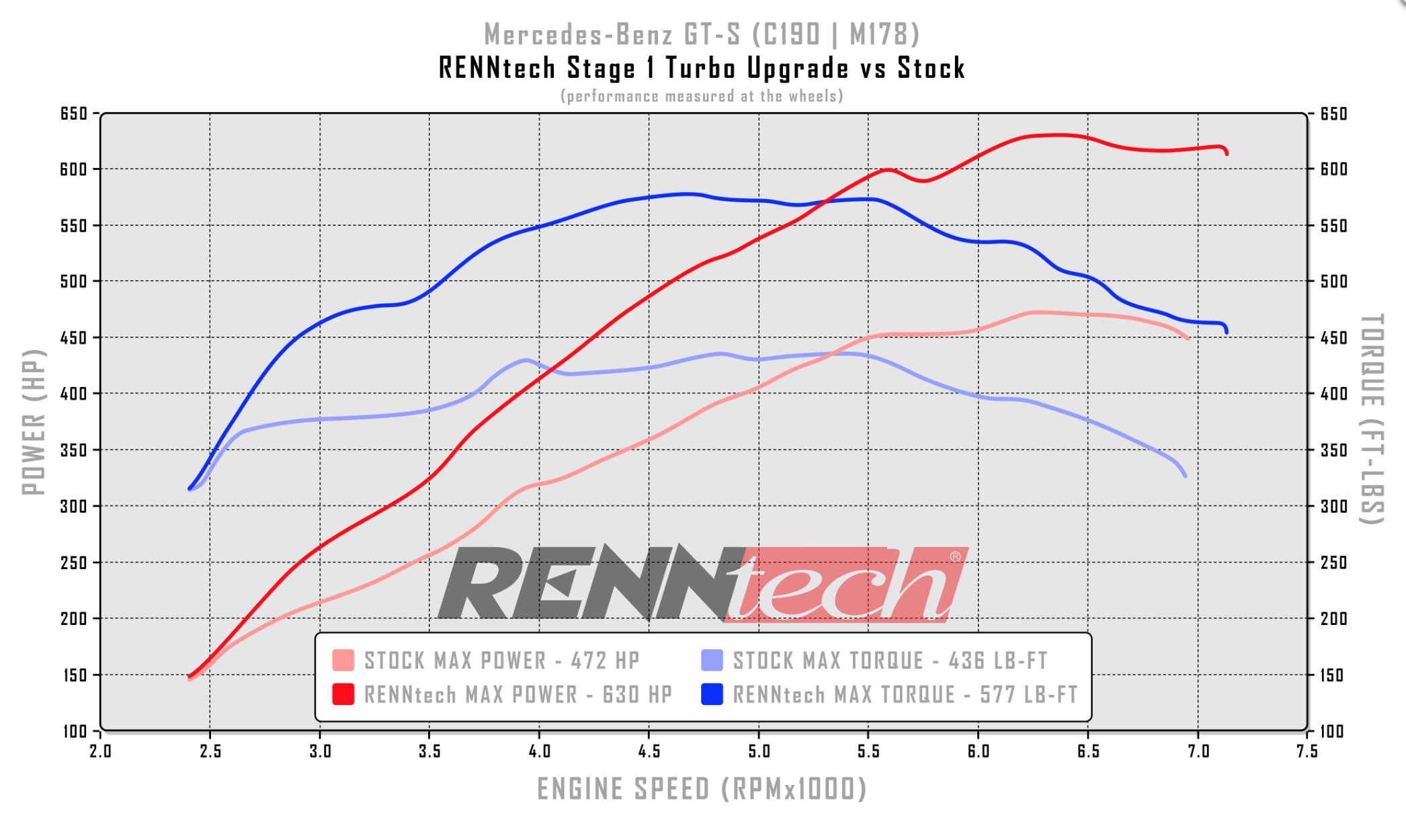
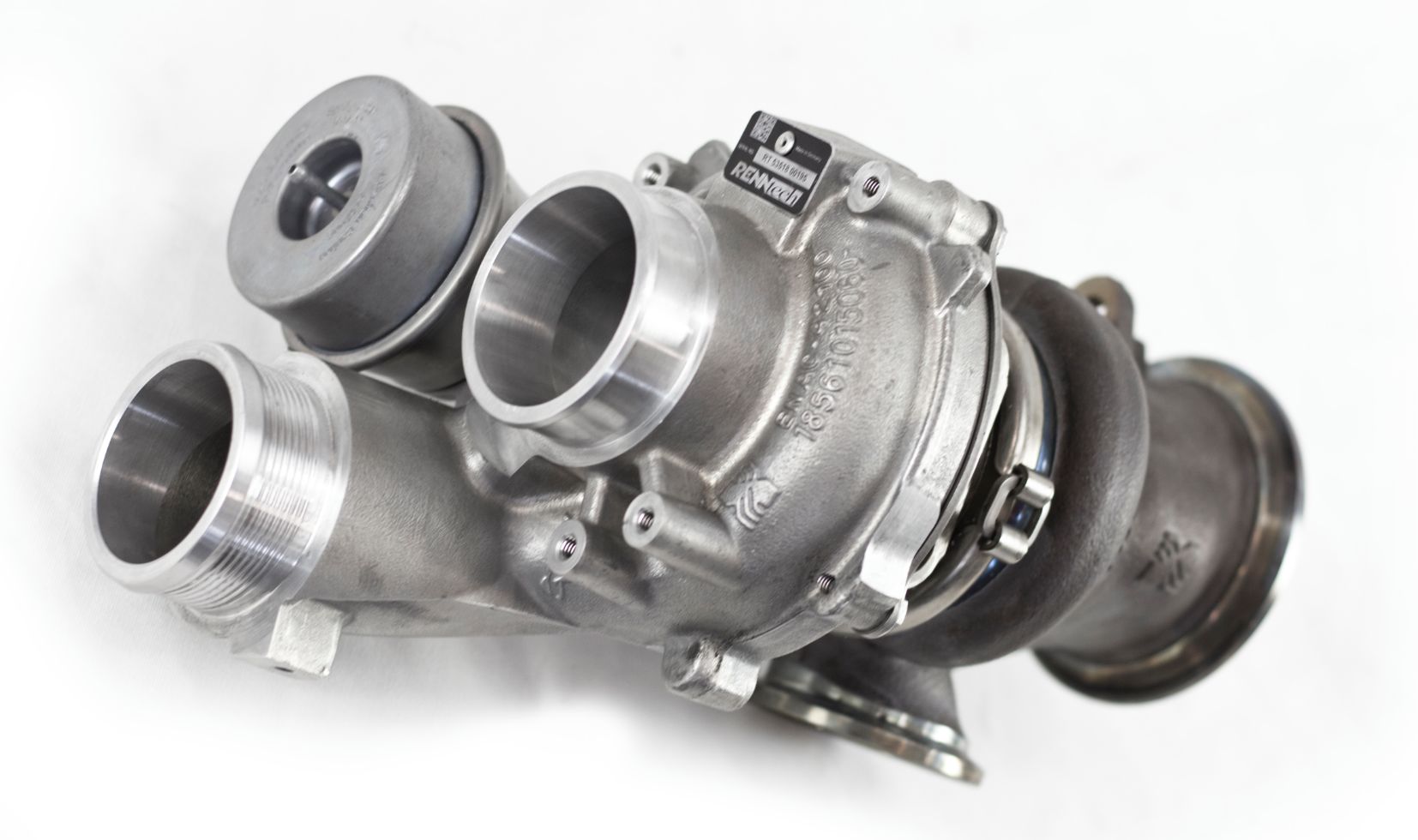
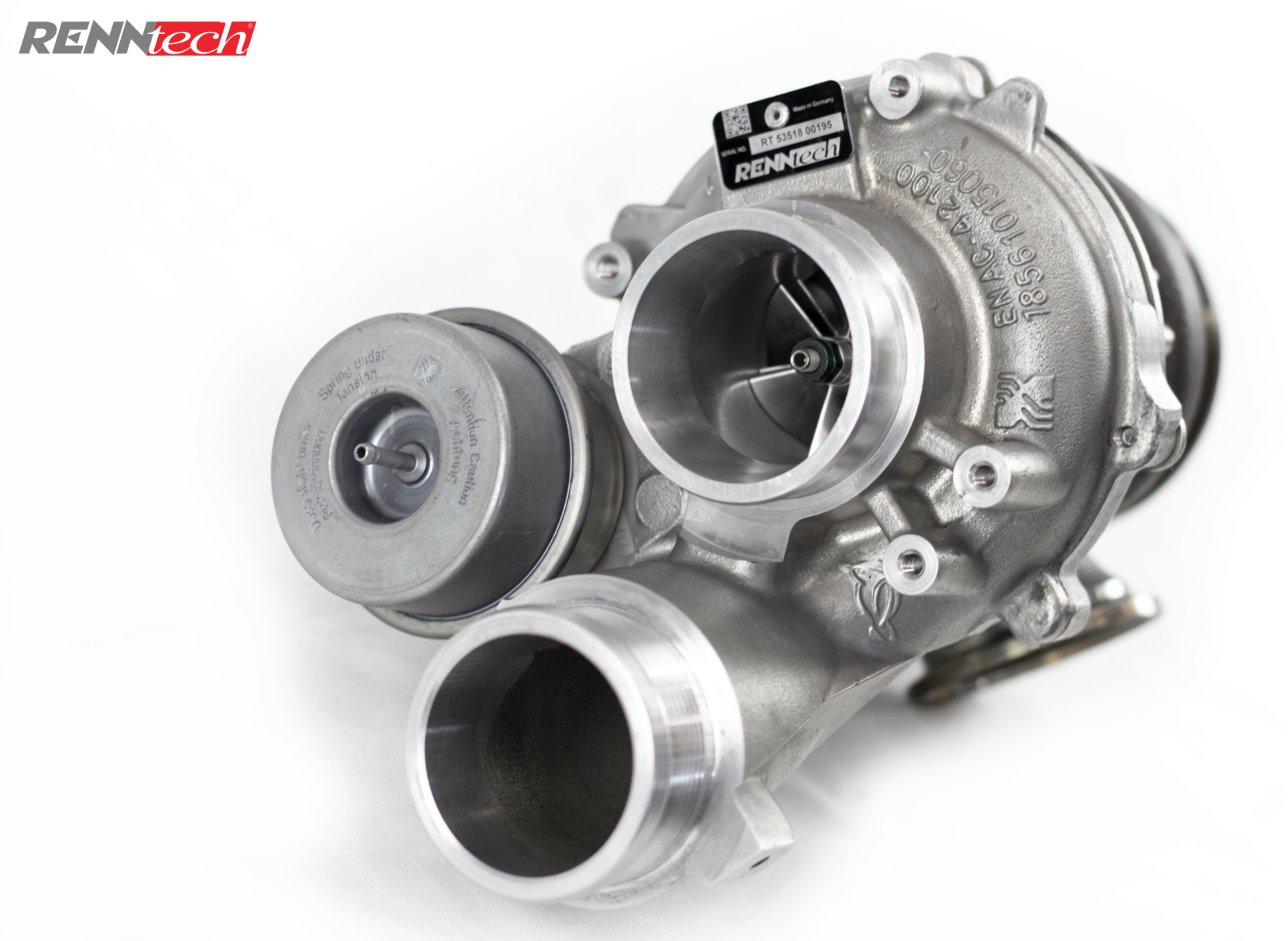
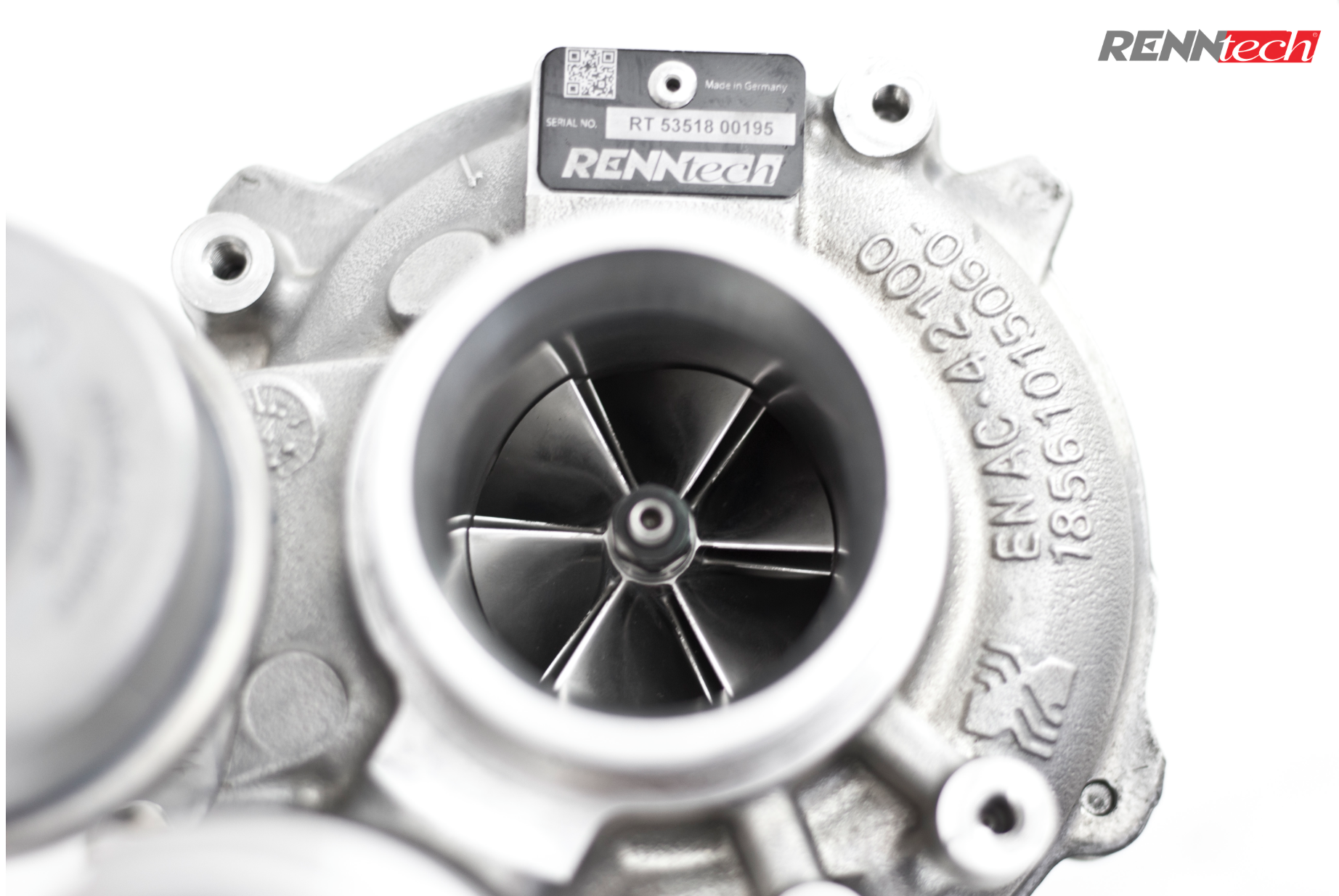
RENNtech lightweight forged billet turbo wheels feature a dramatically larger than stock impeller (inlet side) and an increase in the turbine trim (exhaust side). This combination of high quality, lightweight components compensates for turbo lag despite being a functionally larger turbo. The cartridge supporting shaft is also larger and stronger, therefore designed to handle the larger wheels and additional power. This entire cartridge is then fine balanced as a complete assembly to compensate for these increases. The impeller and turbine housings are then precision CNC machined and flow tested in-house to fit the larger internal cartridge. The end result includes gains up to 180 hp and 161 lb-ft of torque.
More power isn’t the only performance benefit as RENNtech’s turbos spool quicker, and offer a more responsive throttle and immediate power delivery thanks to a reduction in exhaust back pressure, rolling resistance, higher RPM’s and a lighter rotating mass. In addition, their turbo upgrade kit functions with the OEM oil and coolant lines. This isn’t just an OEM turbo charger with machined internals; but a dramatically larger, more powerful turbocharger that blows away anything else on the market!
The RENNtech performance turbo upgrade is truly the ultimate upgrade for your AMG GT-S. Check out the key features of this product and some images below. You can also browse through all RENNtech products here.
Key Features:
The RENNtech Stage I Turbo Upgrade comes with an RENNtech ECU UpgradeÂ
Larger impeller (inlet) and turbine (exhaust) cartridge
Cartridge shaft is larger and stronger to support larger wheels
Entire cartridge is fine balanced as an assembly
Lightweight forged billet wheels
Less rolling resistance offers quicker spooling
Virtually no lag with impressive throttle response
Precision machined impeller and turbine housings
Up to 716 HP and 656 TQ @ crank
Notes:
This Turbo Upgrade requires an additional core charge, which will be credited upon return of OEM turbo core to RENNtech
We have found the new M177 engine stock performance numbers vary from the baseline figures claimed by Mercedes Benz. We typically see higher baseline numbers than claimed by the factory. Numbers will be dependent on conditions and fuel quality.
Power gains are calculated with stock numbers measured by RENNtech
To reach the maximum power level, RENNtech downpipes, diverter valve and high-flow air filters are required.
Our numbers will be dependend on conditions and fuel quality.
Based in Orange County, California, Weistec Engineering is an industry leader in research, development, and design. Their specialty is in computer-aided design (CAD) and vehicle calibration. Weistec has the ability to manufacture quality products that are able to withstand even the most rigorous testing. From OEM vehicle manufacturers to the aftermarket performance enthusiast, they aim to deliver innovative solutions that address all their clients’ needs.
The SLR is one of the most unique and exclusive cars that Mercedes-Benz has produced in recent times. Being the leader in Mercedes aftermarket performance, Weistec took on this piece of art and created a system for it that cannot be matched. Their top engineers spent countless hours designing and developing the most powerful SLR system on the market, let alone the planet.
Check out the video, details and dyne info
below to see just how Weistec Engineering enhanced the SLR supercar. Be sure to also browse through out selection of Weistec products here.
Detailed Look at the SLR Biturbo System
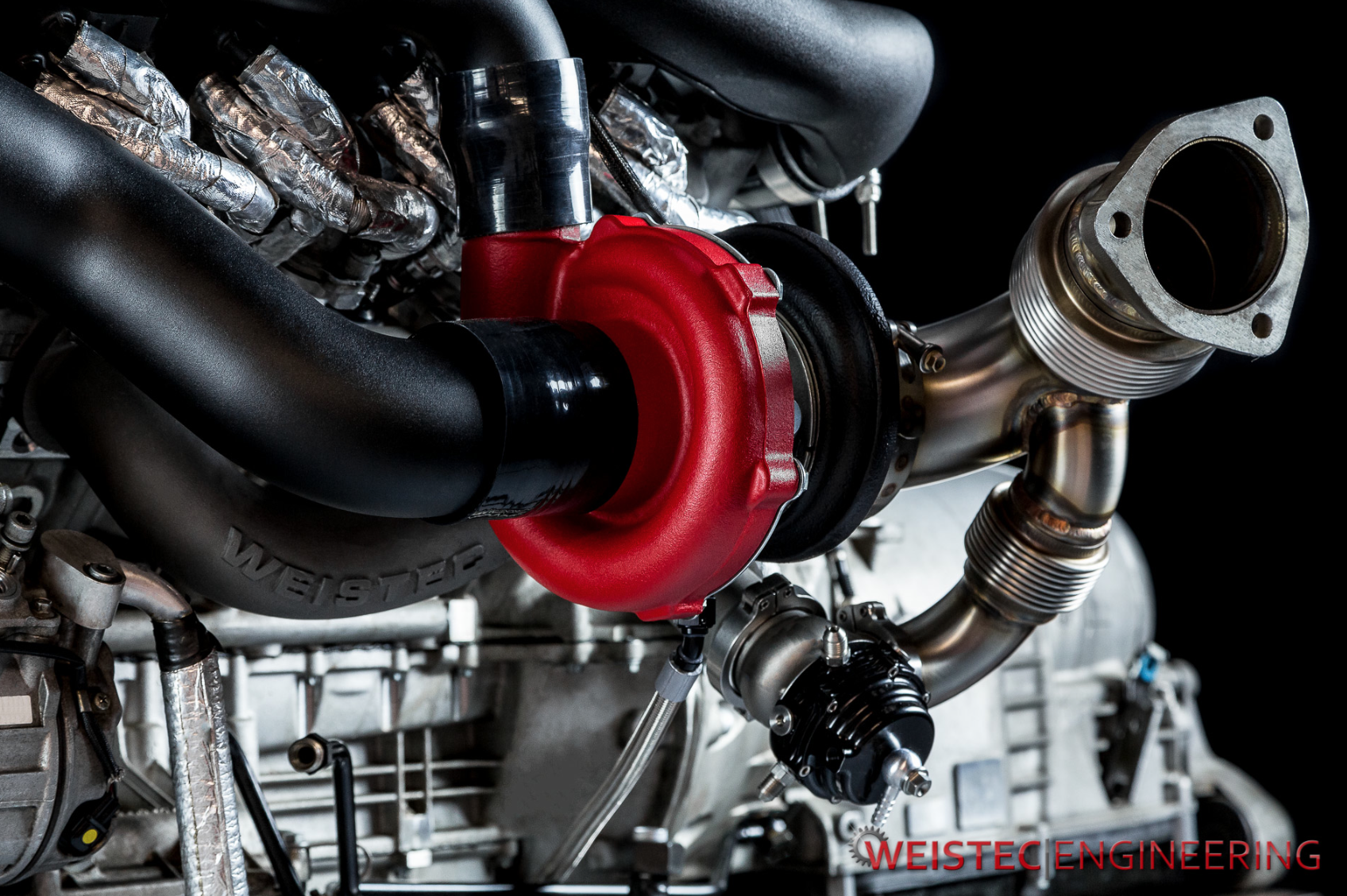
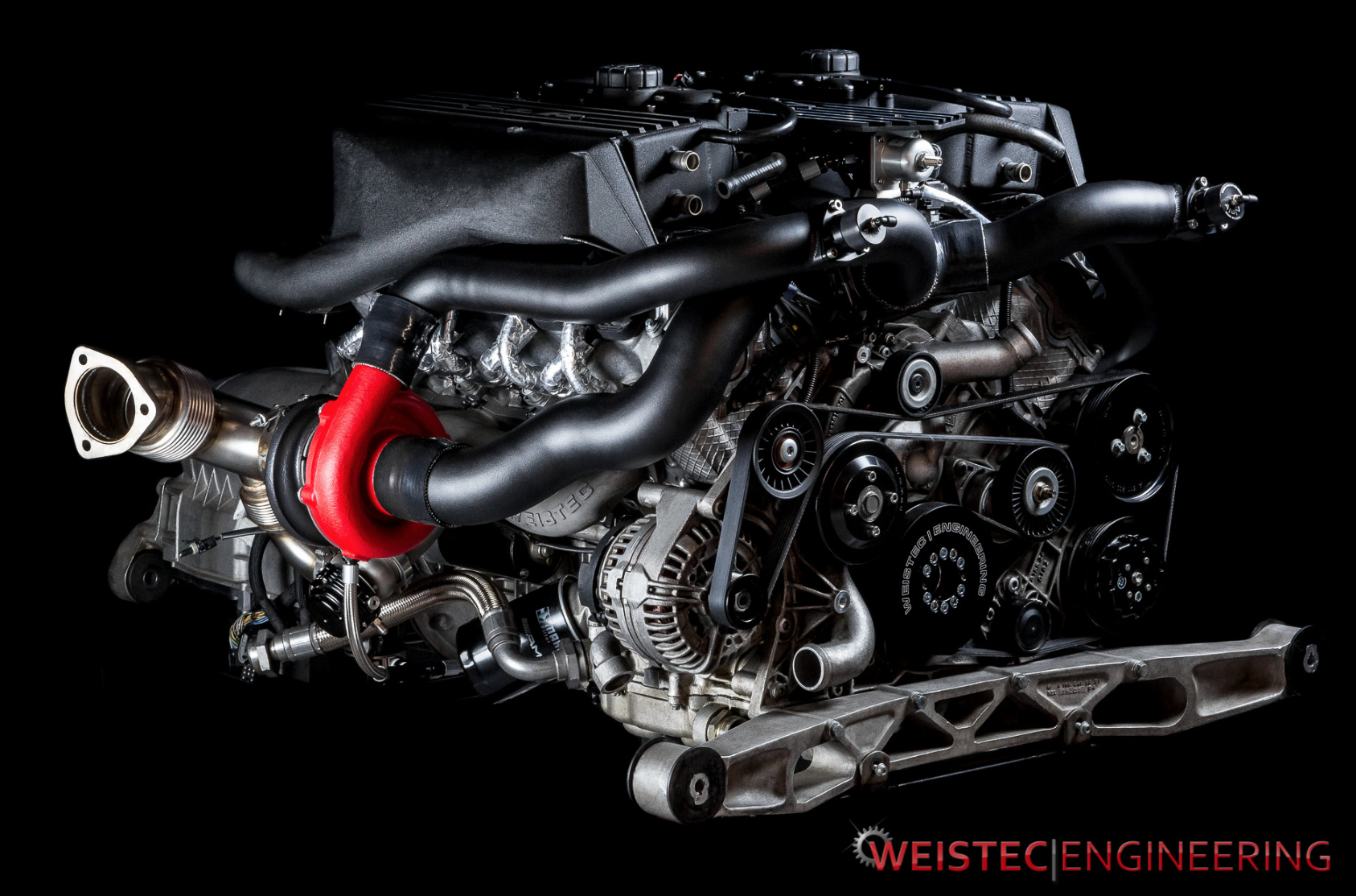
The factory supercharger system is replaced with a massive water to air intercooler to work in conjunction with the factory SLR intercoolers providing maximum cooling and ensuring consistency in power. Only the highest quality materials were used to create the Weistec SLR Biturbo System, including Inconel Steel, Stainless Steel, and Aircraft Grade Aluminum. The goal was simple; a complete system providing consistent and usable power without sacrifice.
Weistec SLR Biturbo System Feature Film
Key Features of the SLR Biturbo System
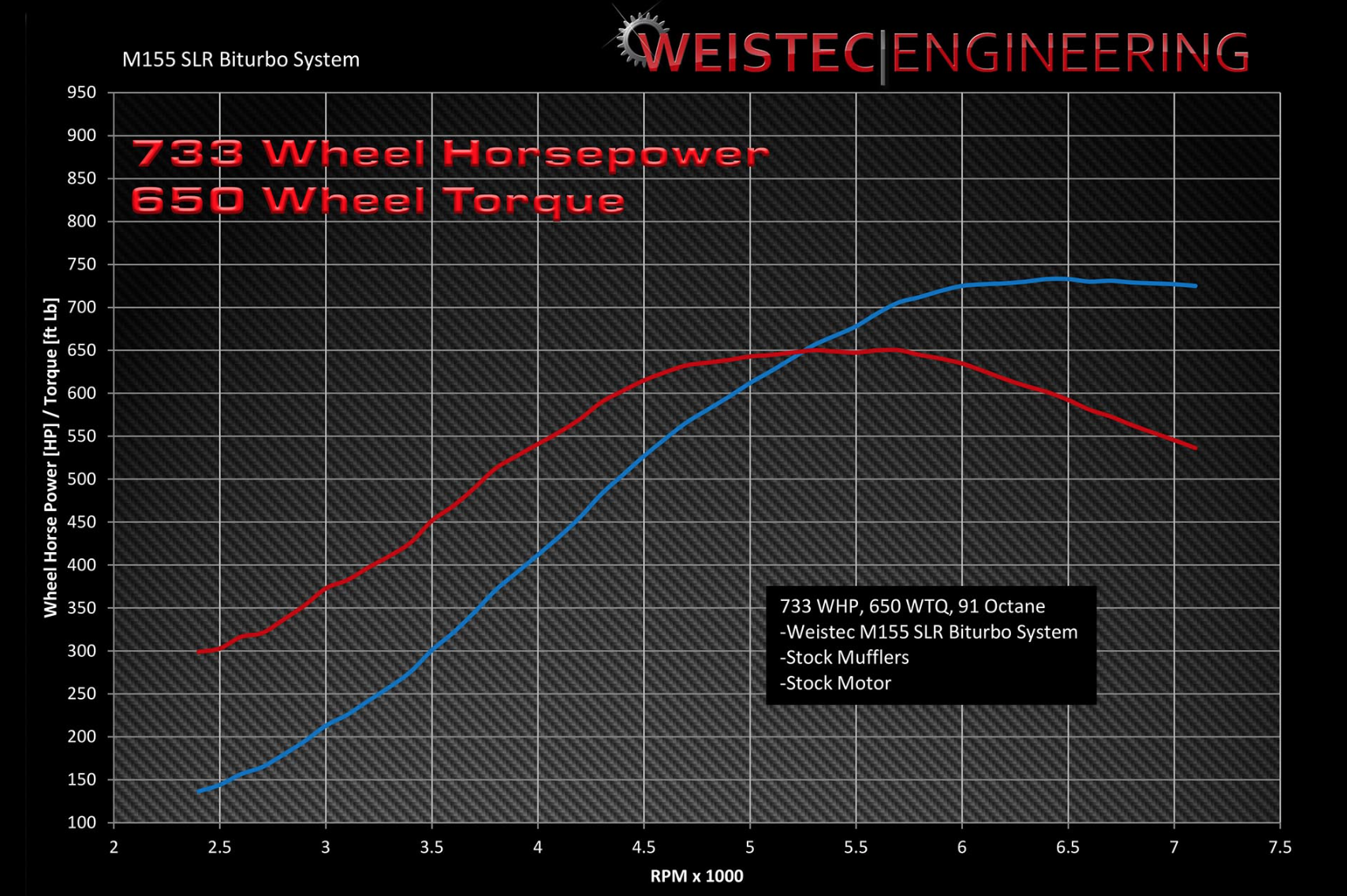
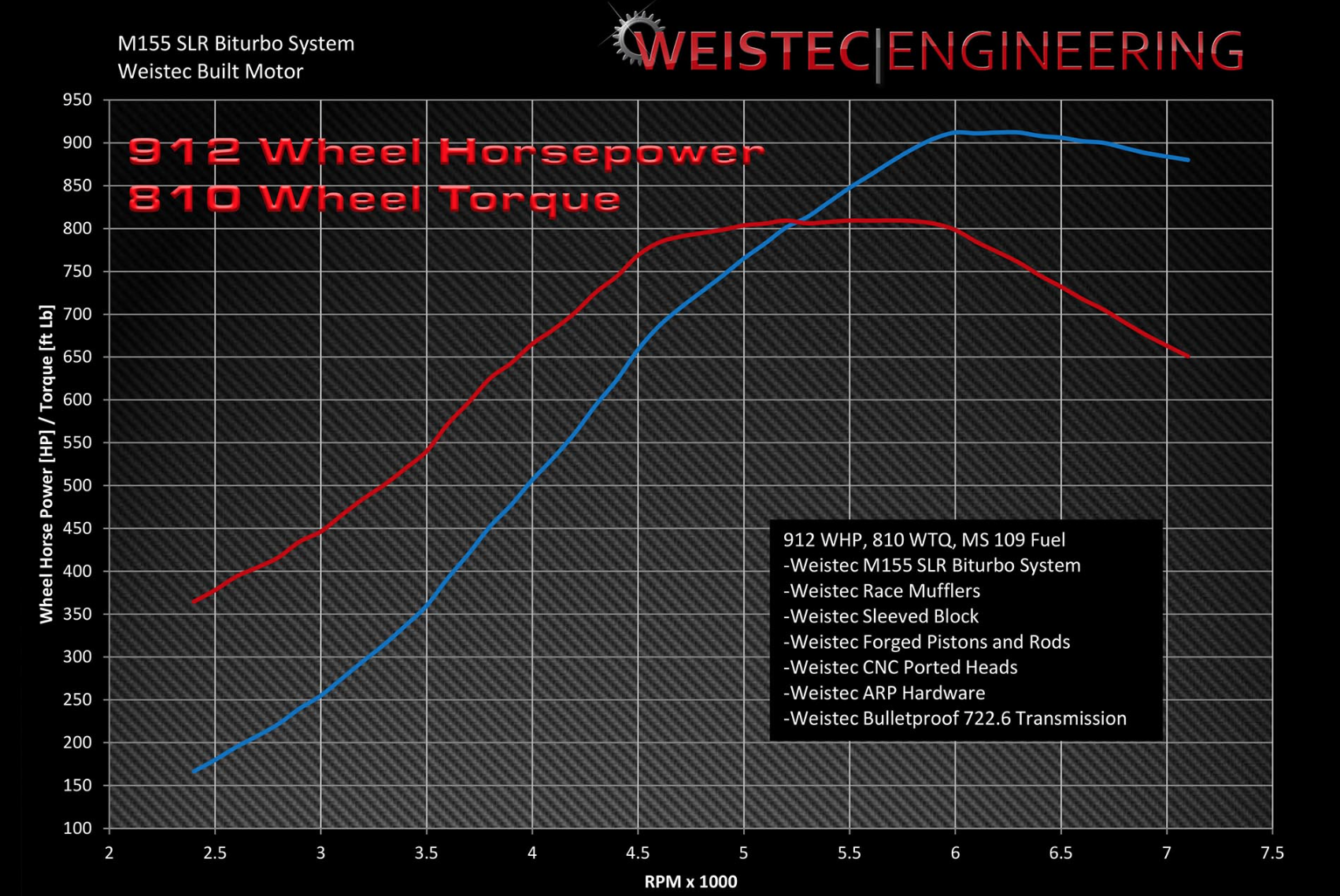
730+ Wheel Horsepower (860 BHP) on 91 Octane Fuel
900+ Wheel Horsepower (1050 BHP) on MS109 Fuel with Supporting Upgrades
Twin Ball Bearing Turbochargers
CNC Billet Compressor Wheels
Dual External Wastegates
Dual Weistec Anti Surge Valves
Aircraft Grade Aluminum Components
Weistec Water to Air Intercooler Replaces Factory Supercharger
IPD (Innovative Pro Design) was founded in 2004 by Mike “Turbo: Kirakosyan. The IPD Plenums are all designed, tested and manufactured in Southern California – the heart of the Porsche tuning capital. Their plenums and thermal blankets are the best performance upgrade for Porsche. Aside from quality products that hold a great warranty, IPD has the best dyno proven bolt-on power in the industry.
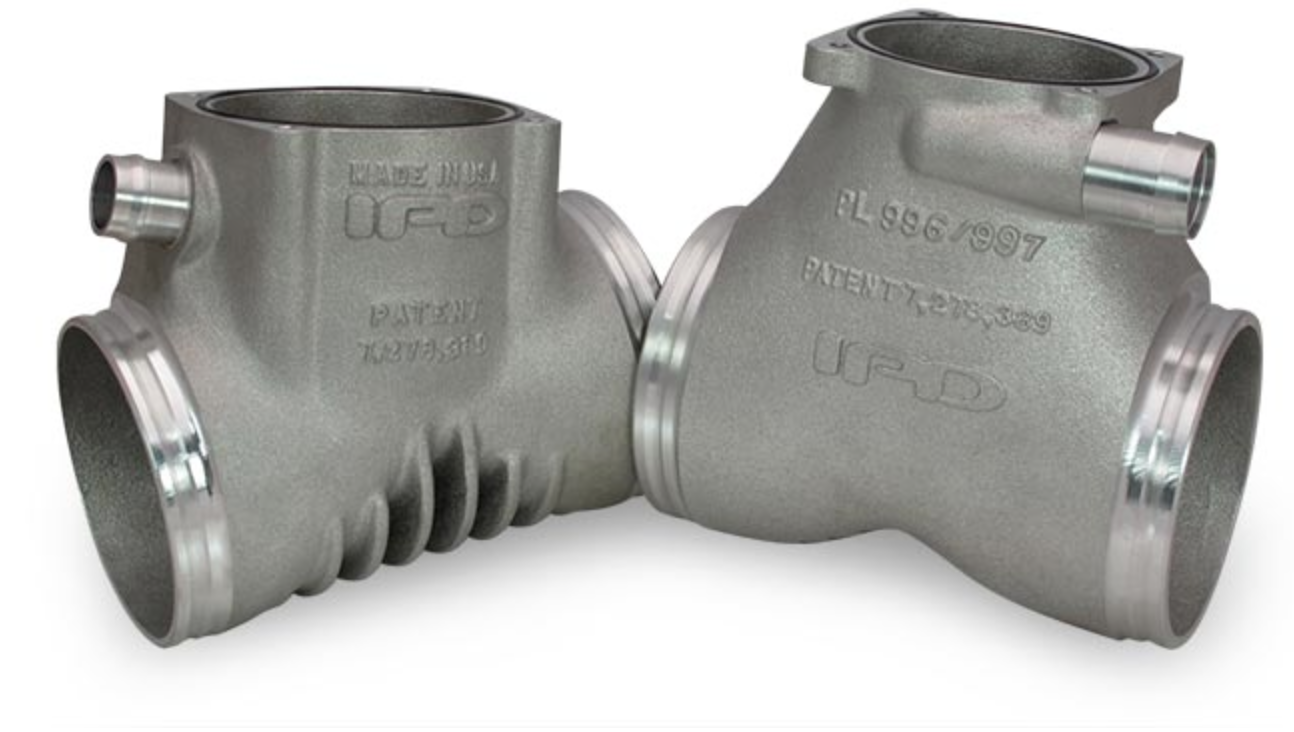
IPD Porsche Plenums: The revolutionary and patented design of IPD’s Plenums improve intake air flow by replacing the factory plastic “T”-style design with a more efficient, cast aluminum “Y” design. These plenums distribute the air flow more effectively by using a true merge collector and reducing pressure drop at the throttle body inlet. This innovative “Y†diversion area splits and channels intake air flow reducing air flow turbulence and increasing air flow velocity. This superior and proven design ultimately results in better power gains throughout the horsepower and torque curves.
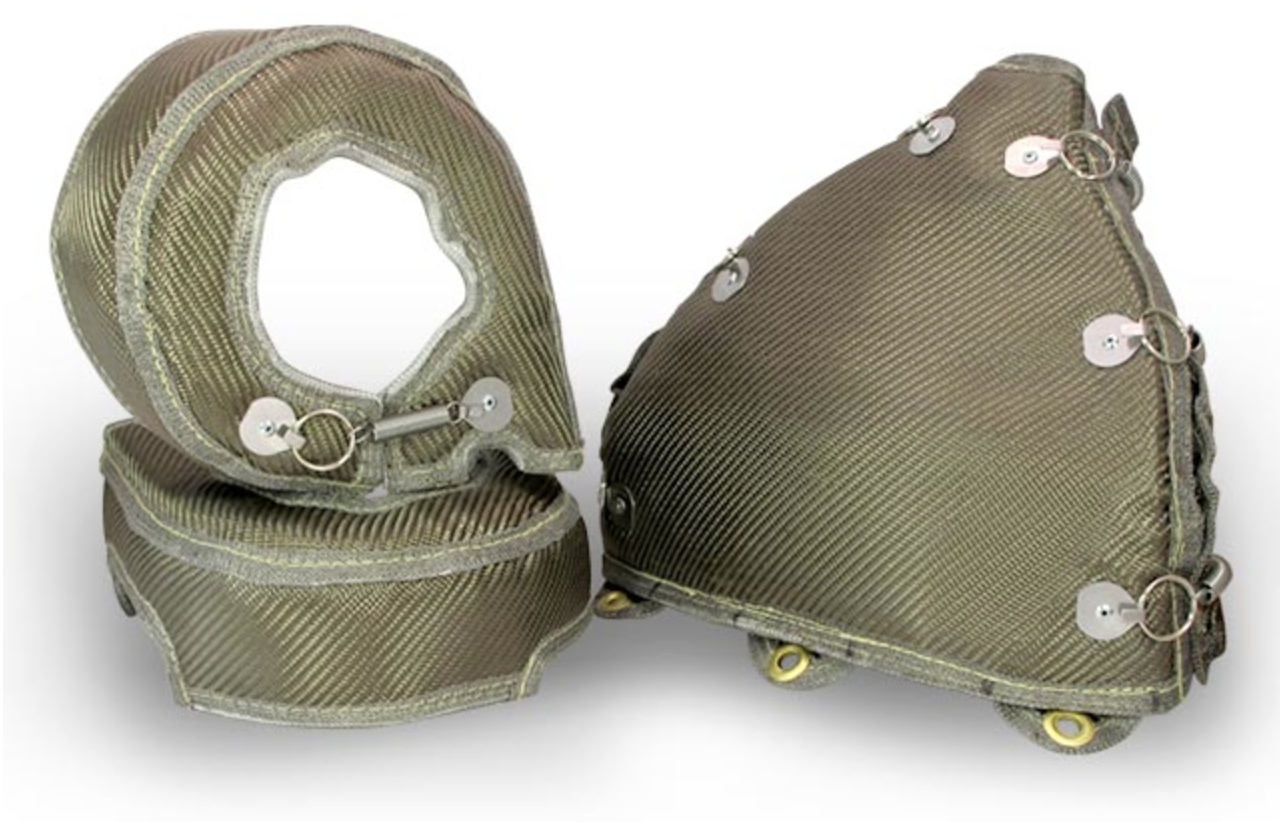
IPD Performance Thermal Blankets: The new IPD Thermal Performance Blankets (TPB) are specifically manufactured to increase power and boost response by insulating and containing critical exhaust energy that expedites exhaust flow through the headers and turbos. Thermal blankets are designed to contain heat inside the exhaust system, where it is most effective without exceeding critical EGT thresholds. Wrapping the headers and turbine hot housings decreases convective heat transfer from underbody air, which is crucial for your vehicle’s performance.
Watch the video below, as Greg Martin of IPD provies us with a detailed tour of the manufacturing process at the machine shop. You can follow IPD on Instagram @ipdplenums and on Facebook, where they post all kinds of plenum and Porsche-related content. Be sure to also check out Vivid Racing’s entire lineup of IPD plenums here.
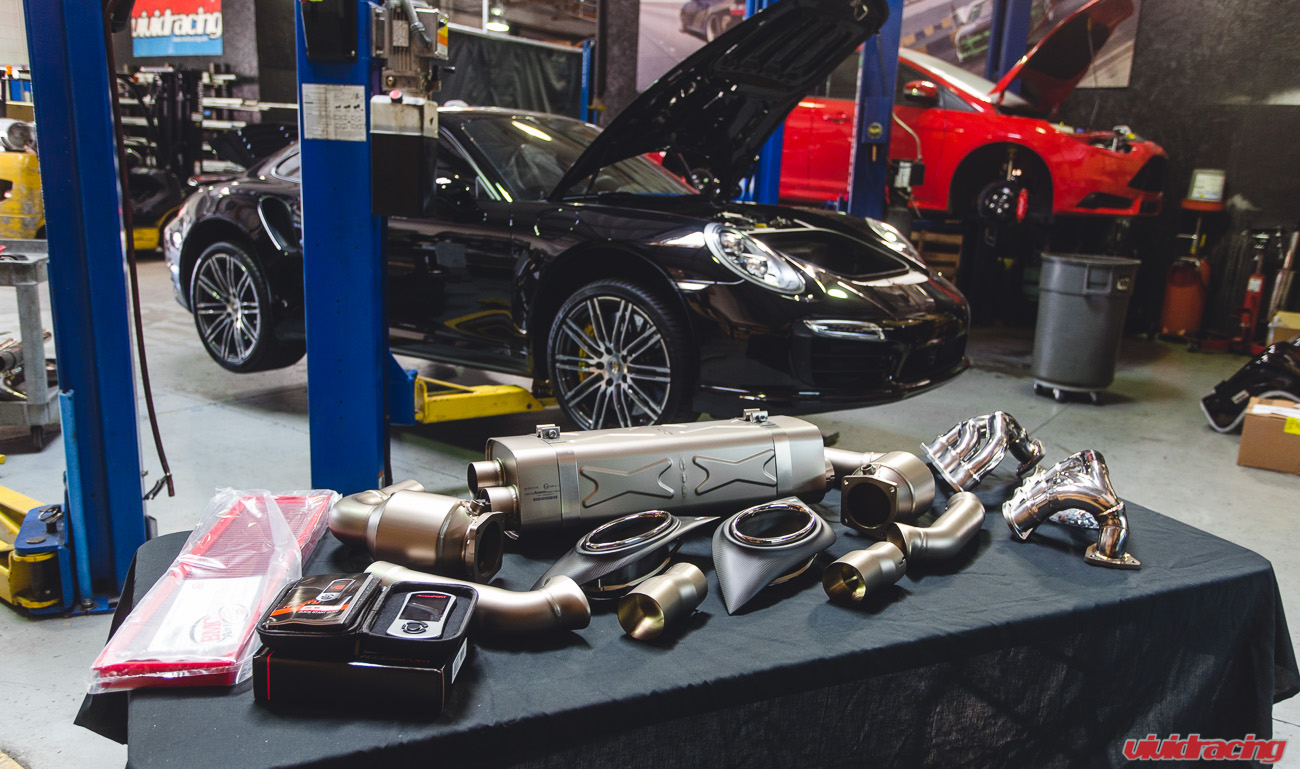
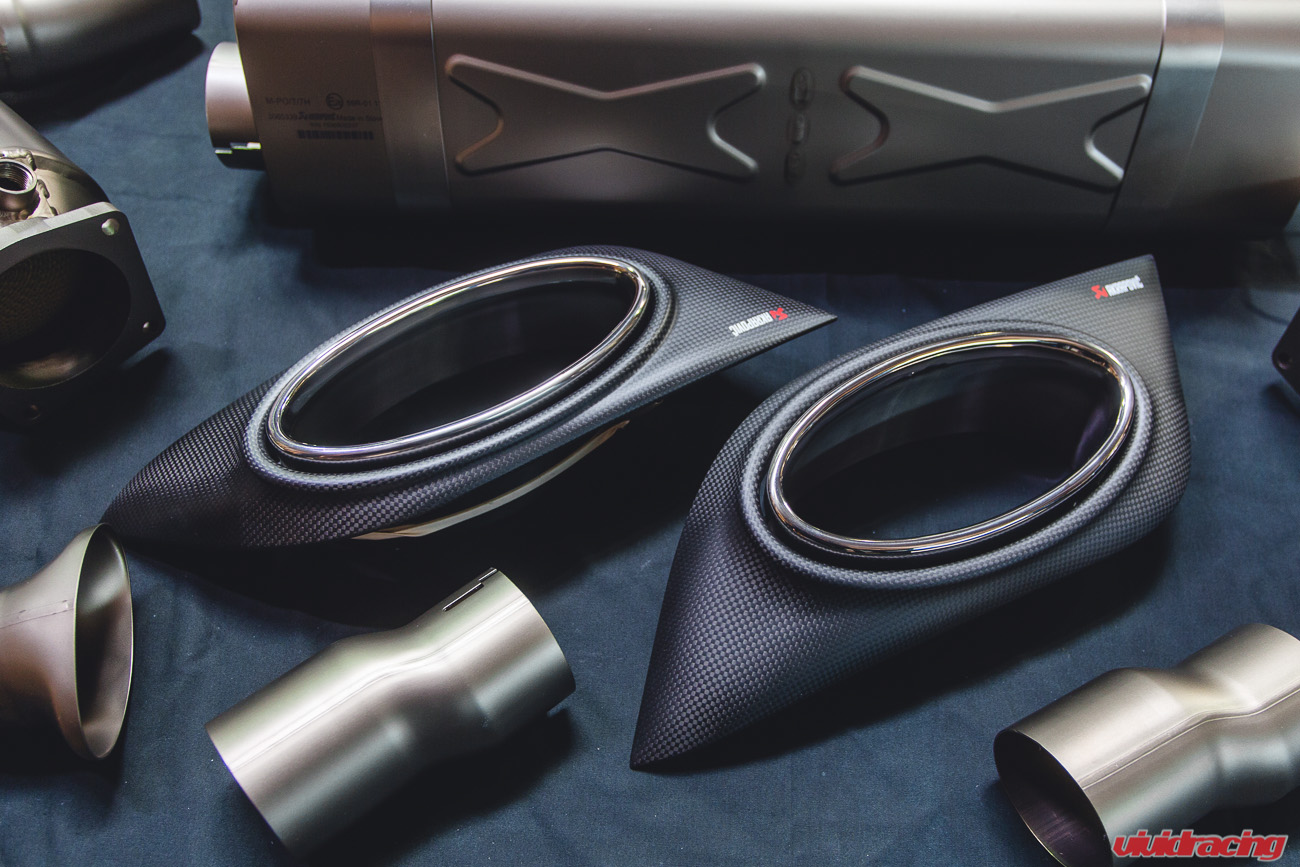
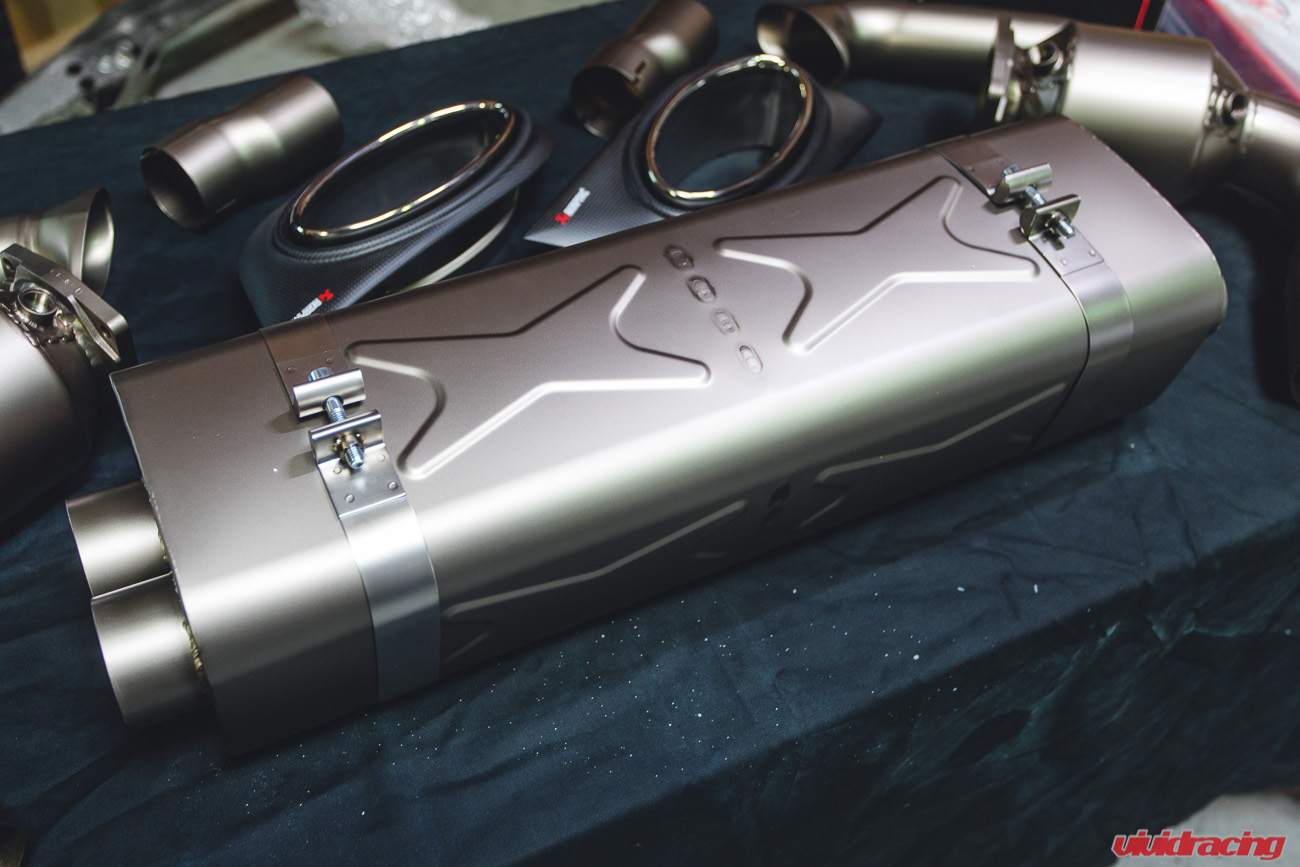
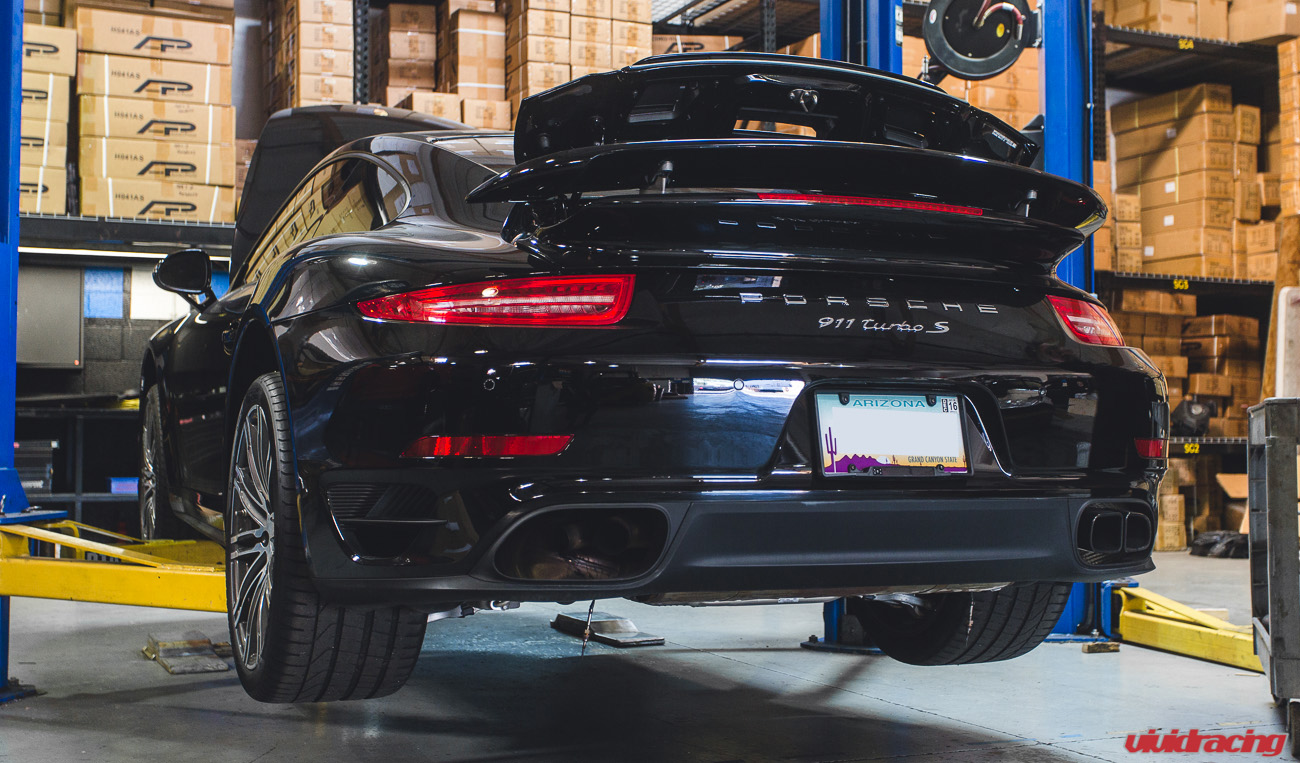
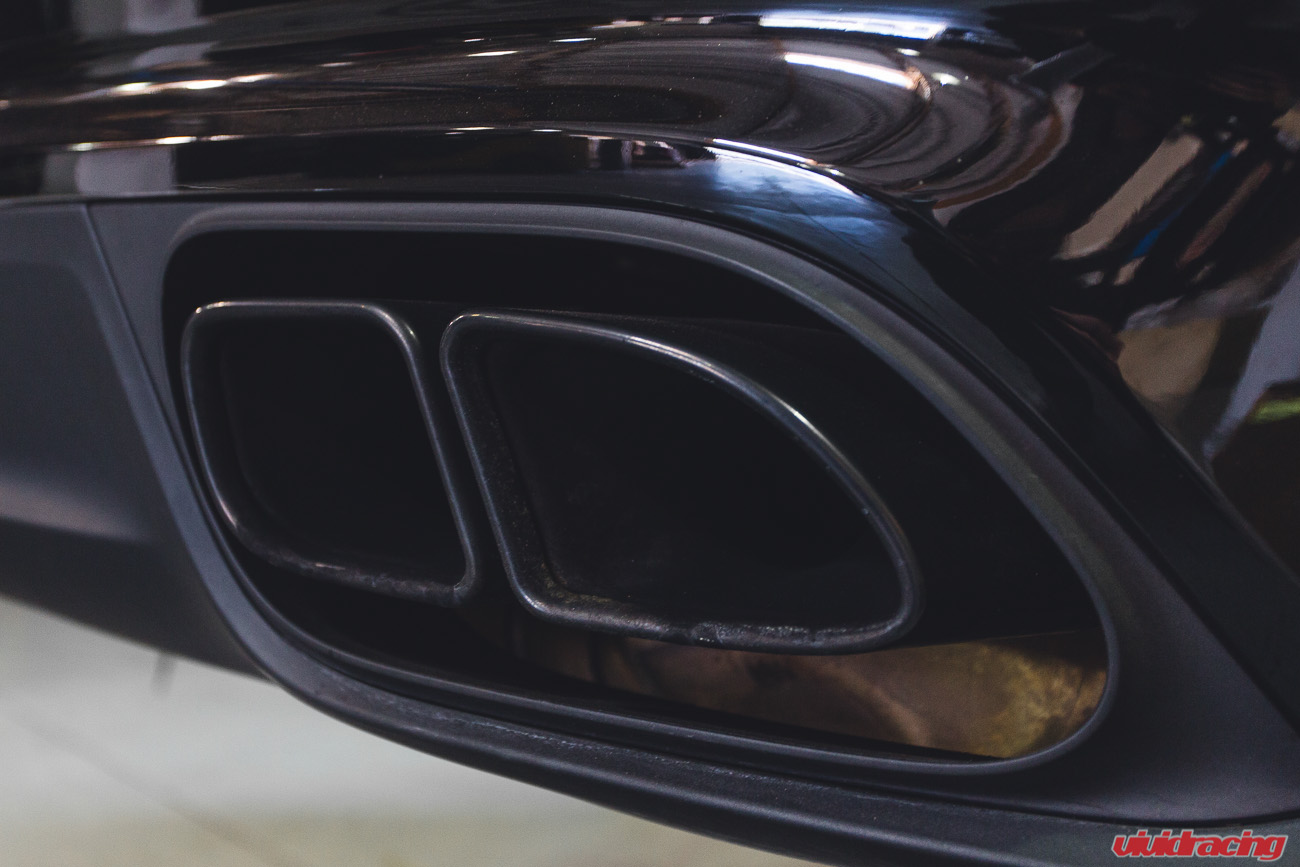
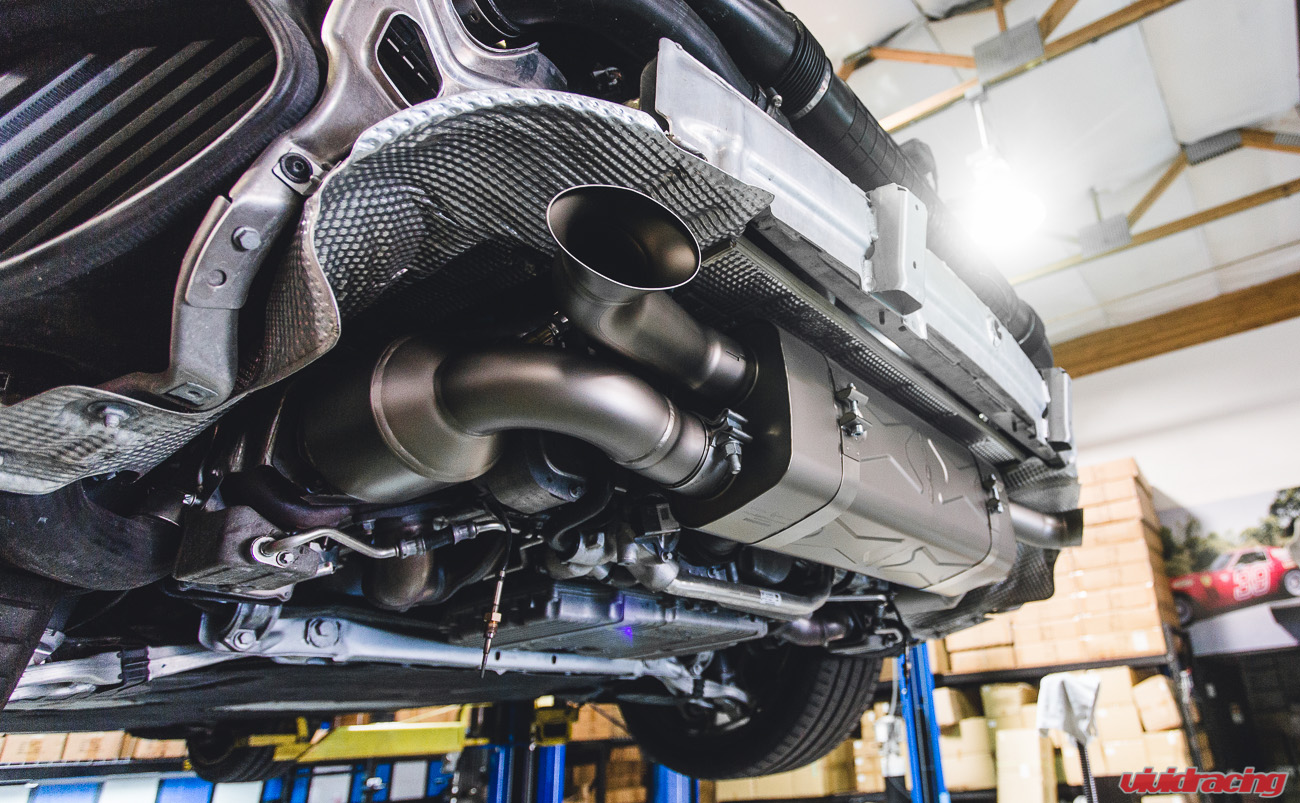
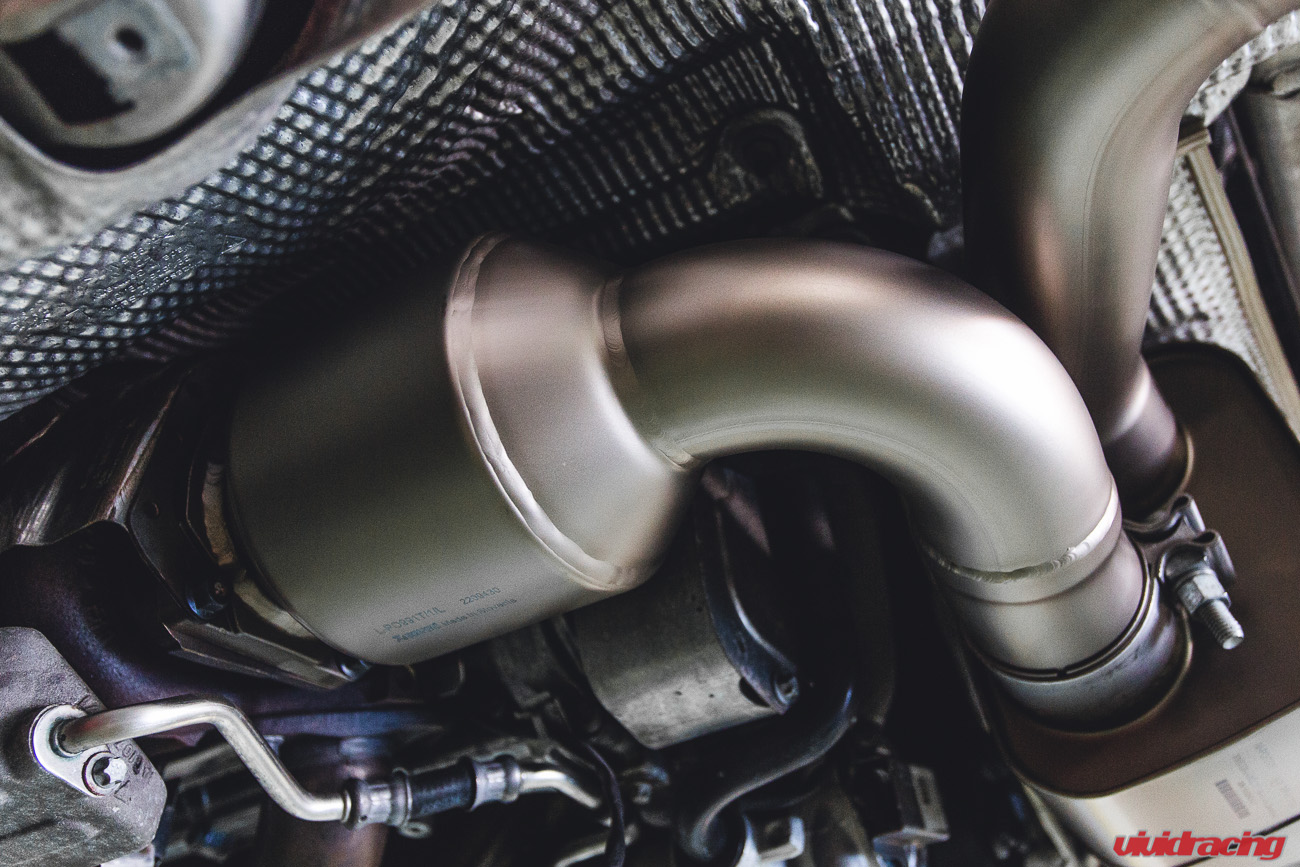
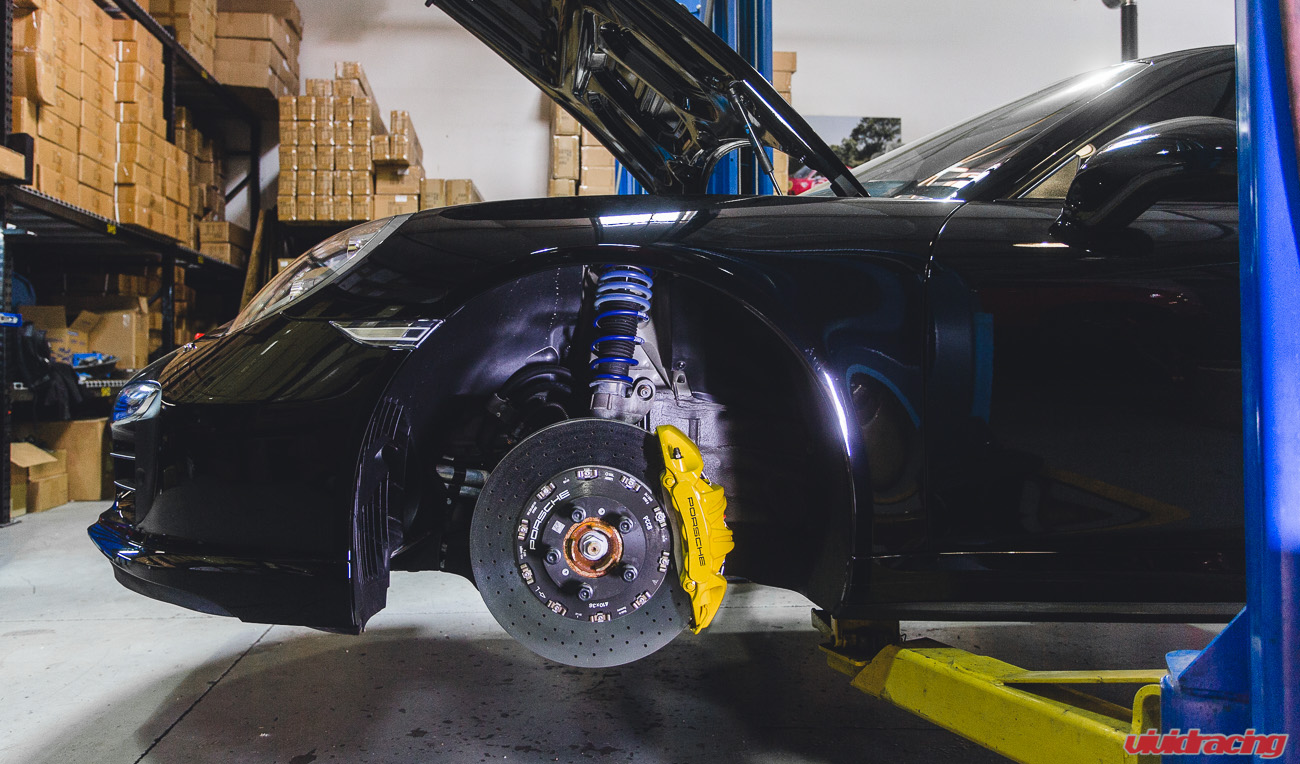
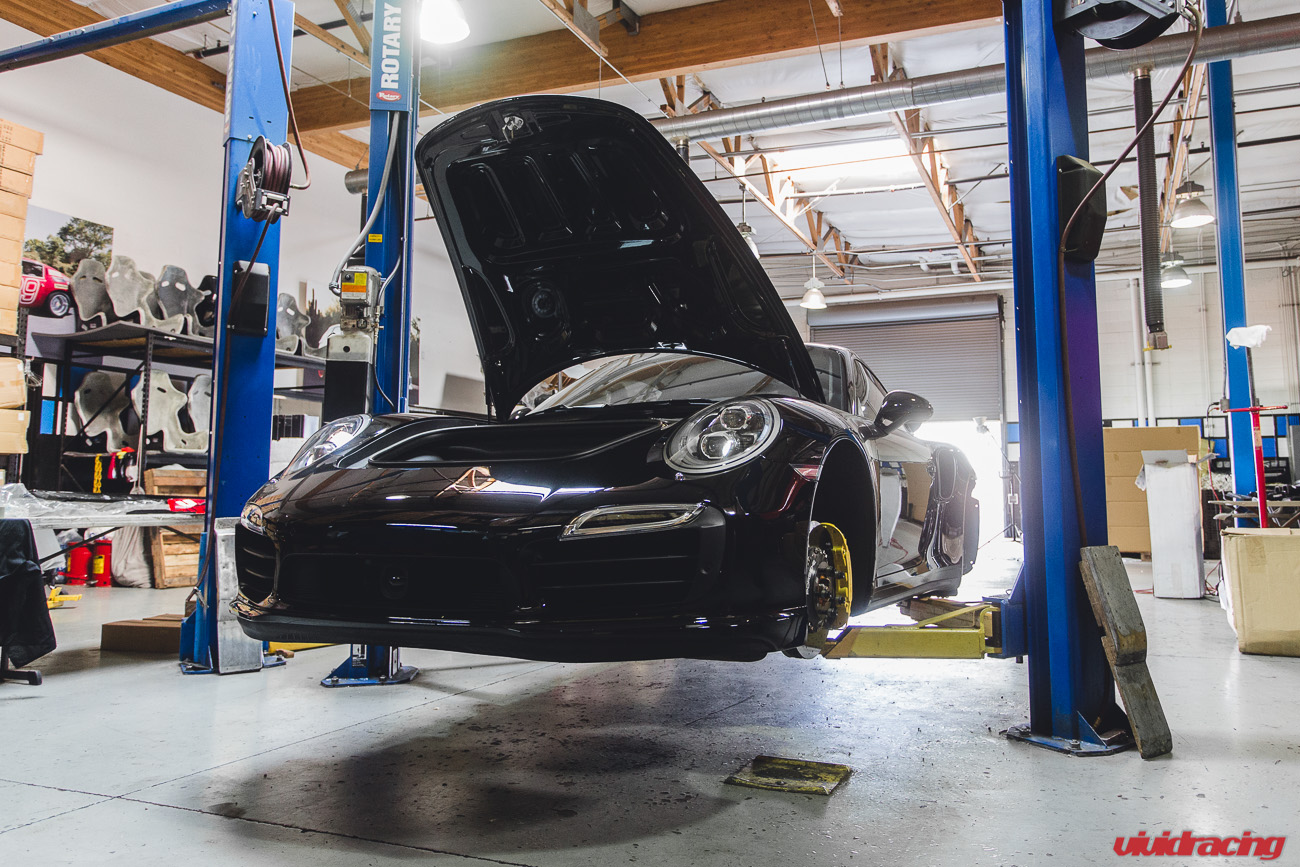
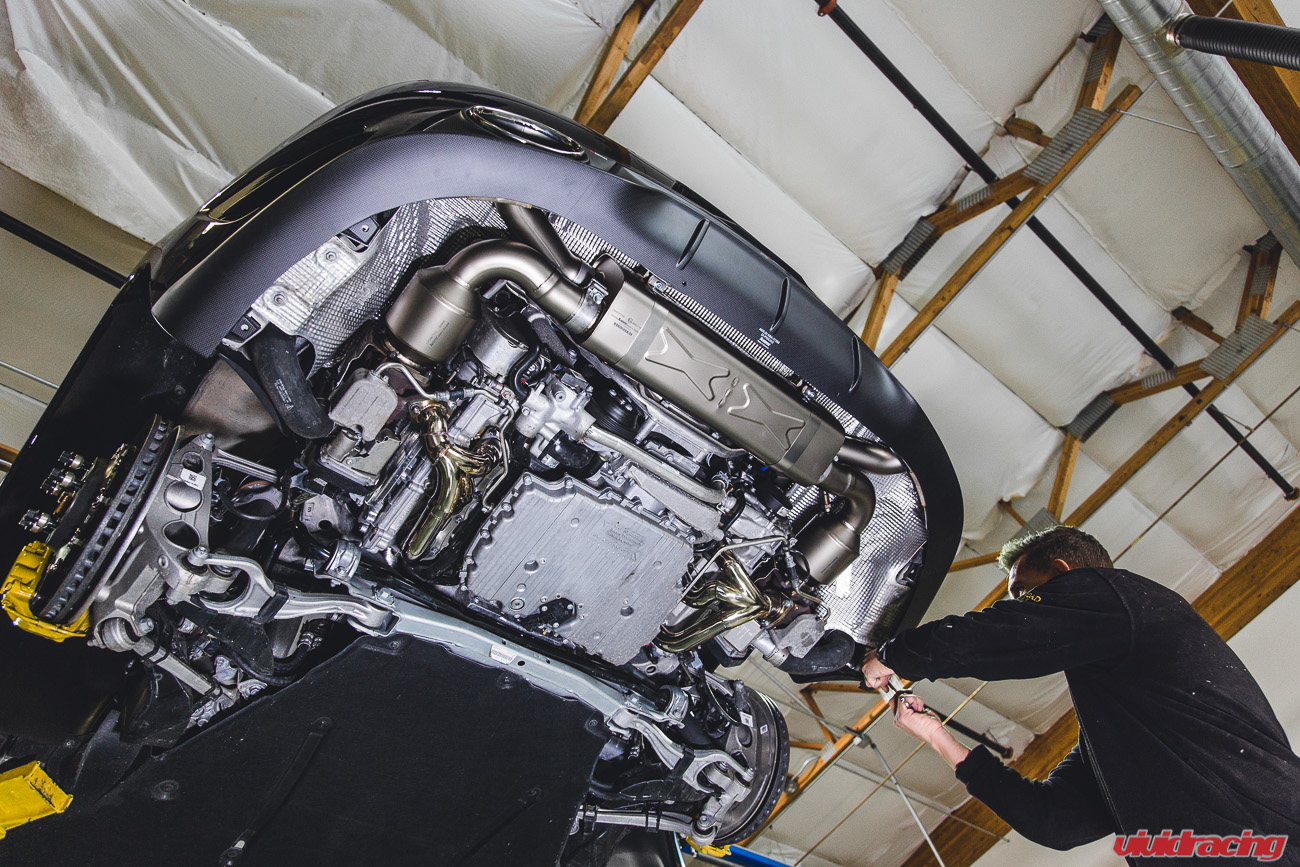
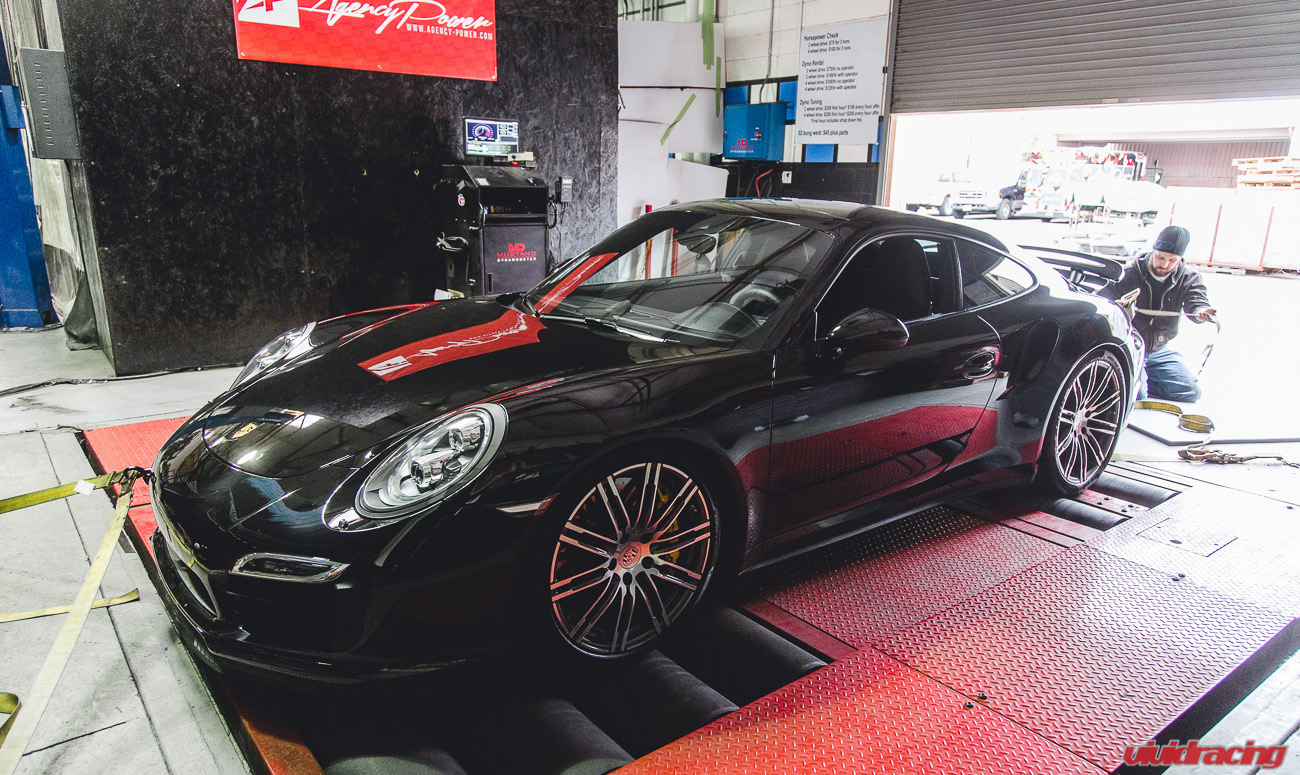
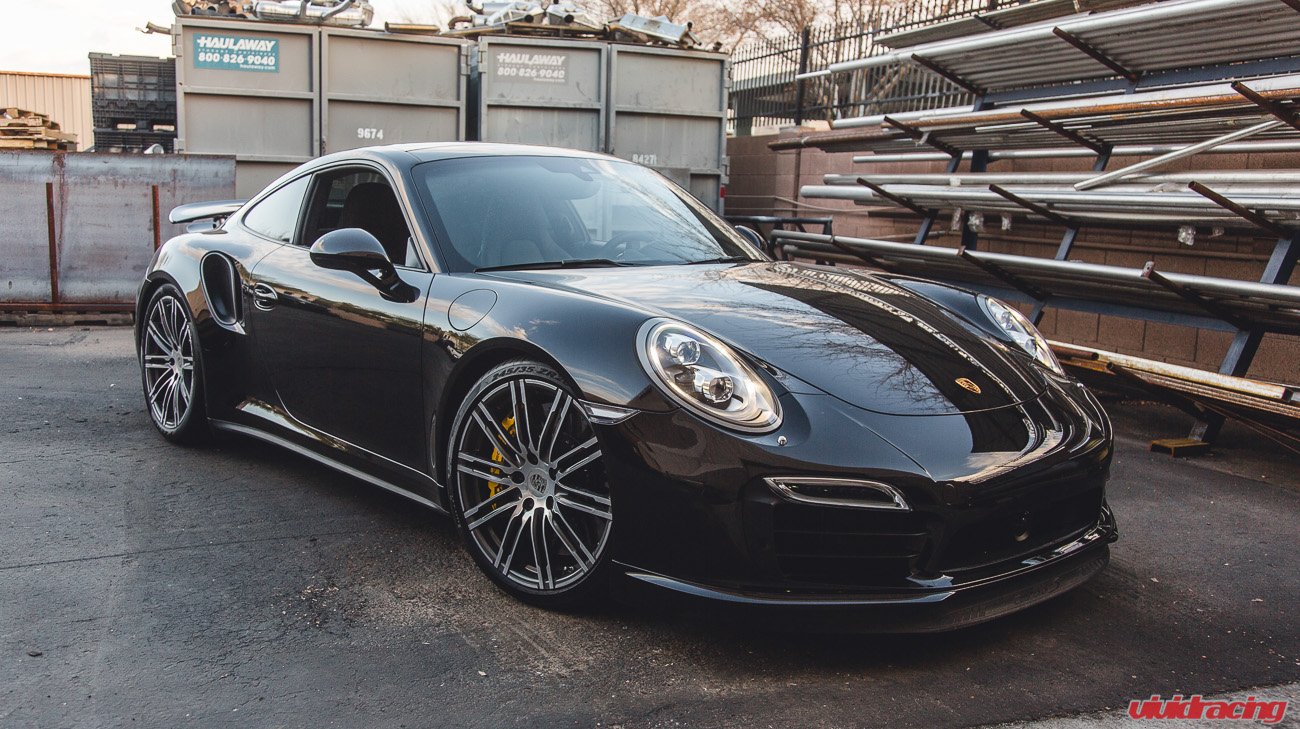
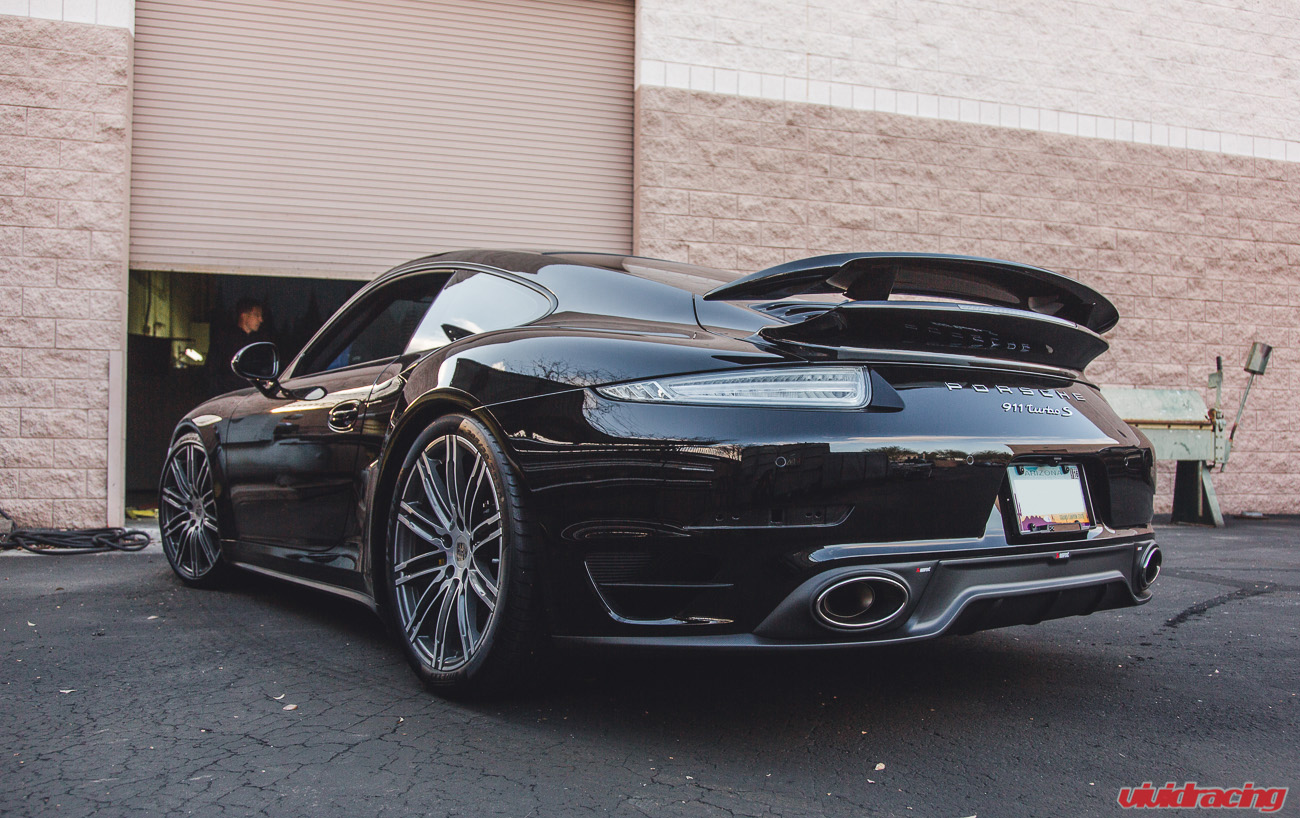
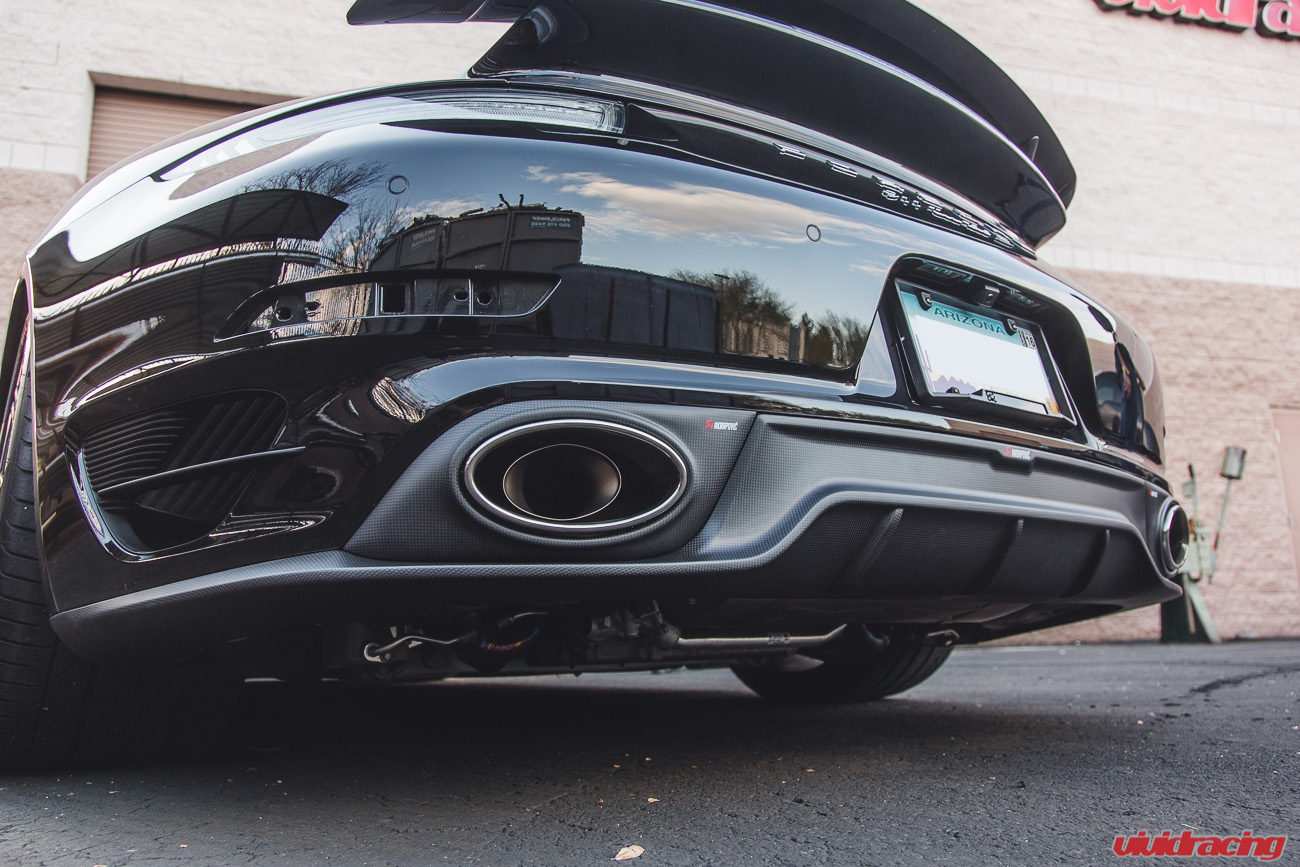
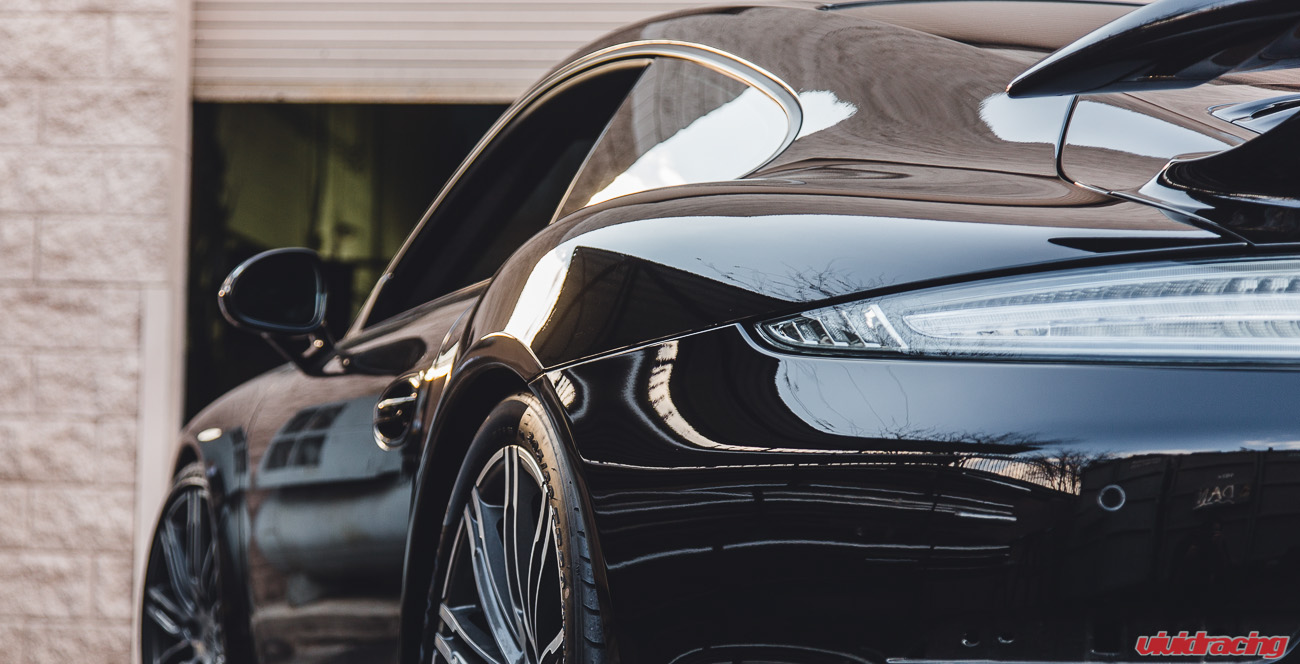
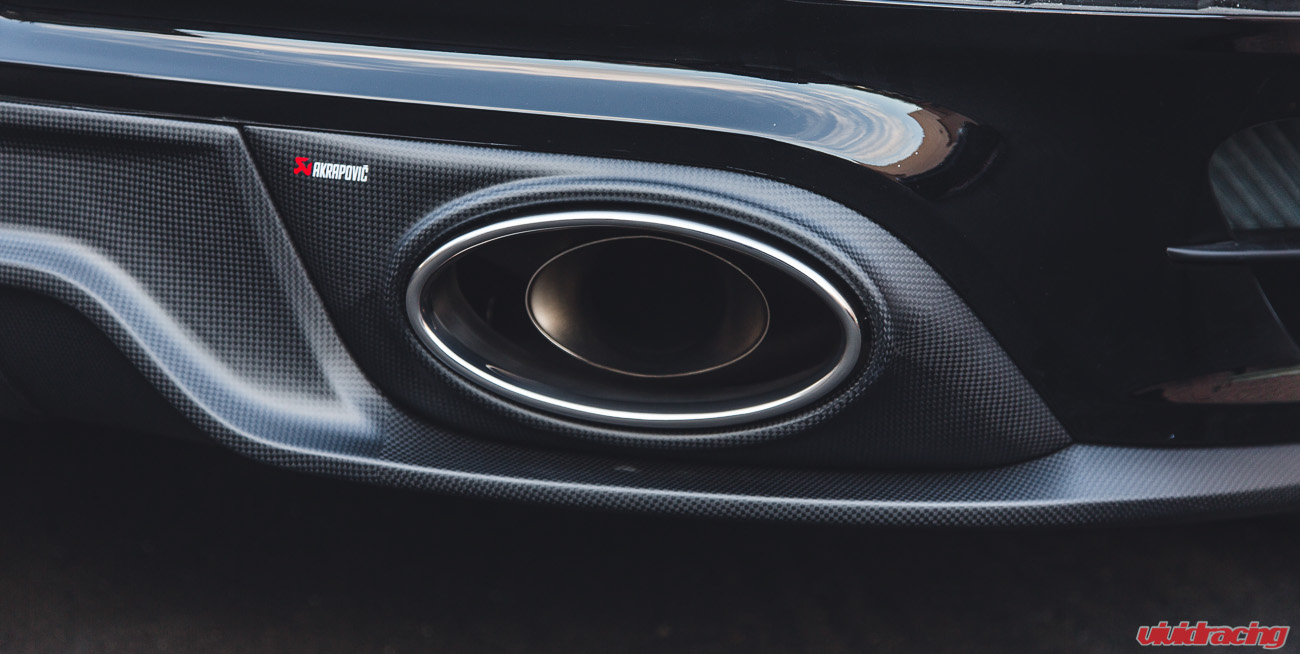
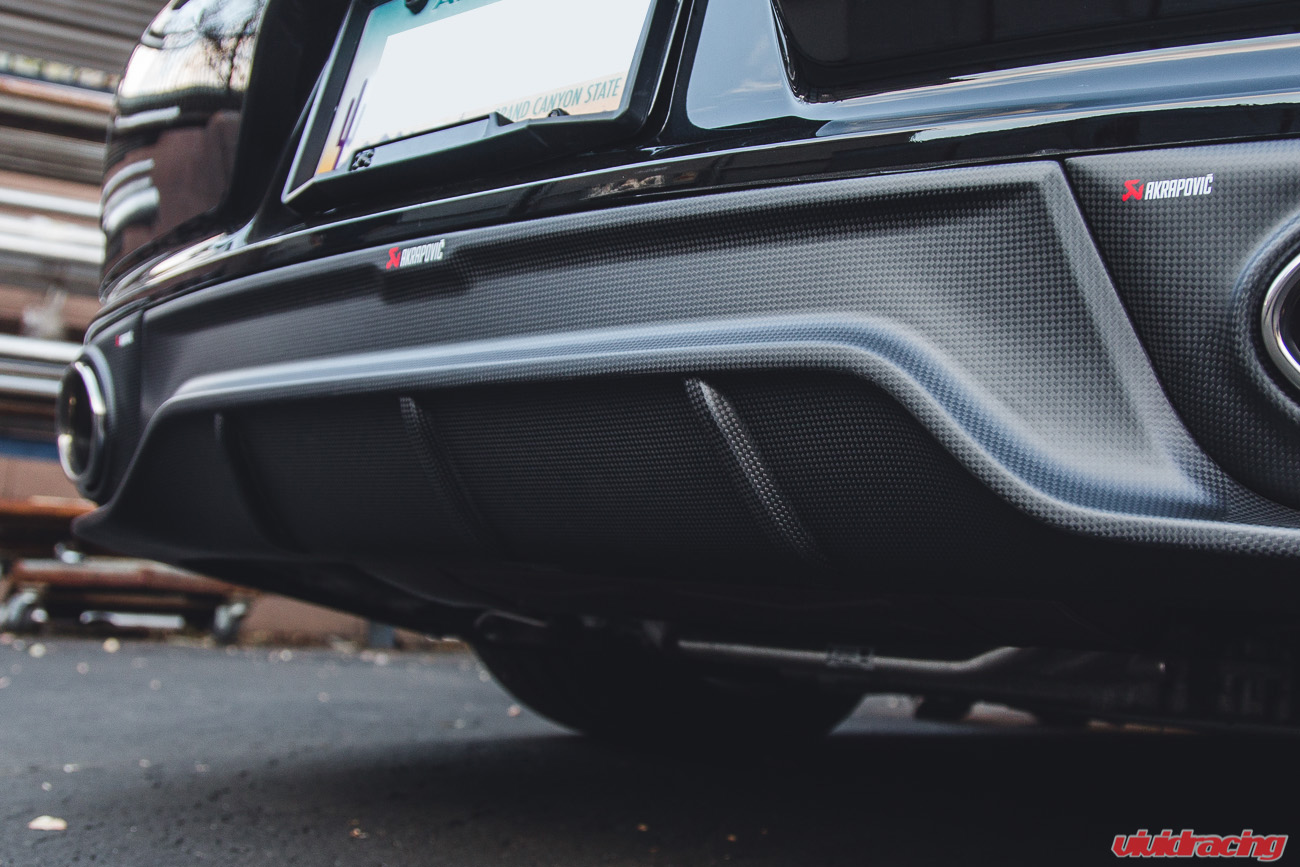
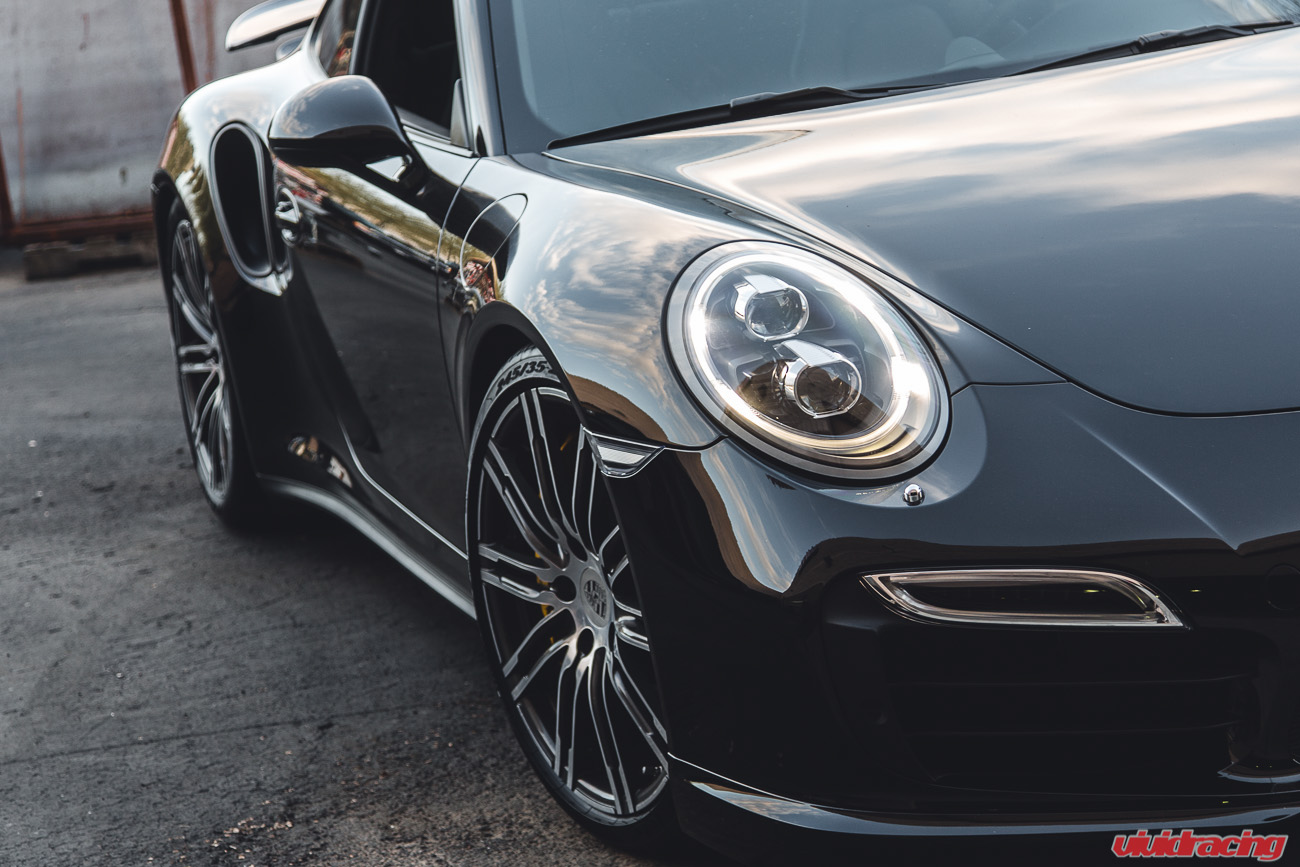
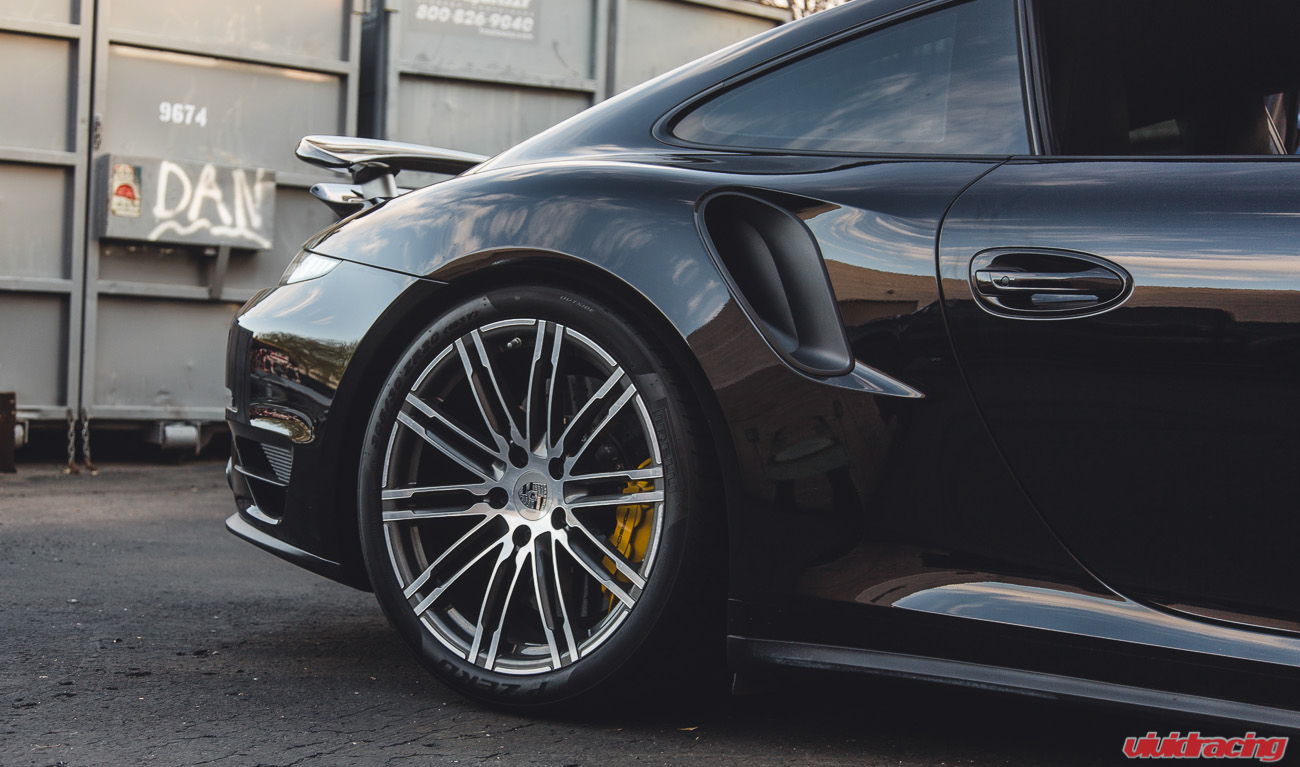
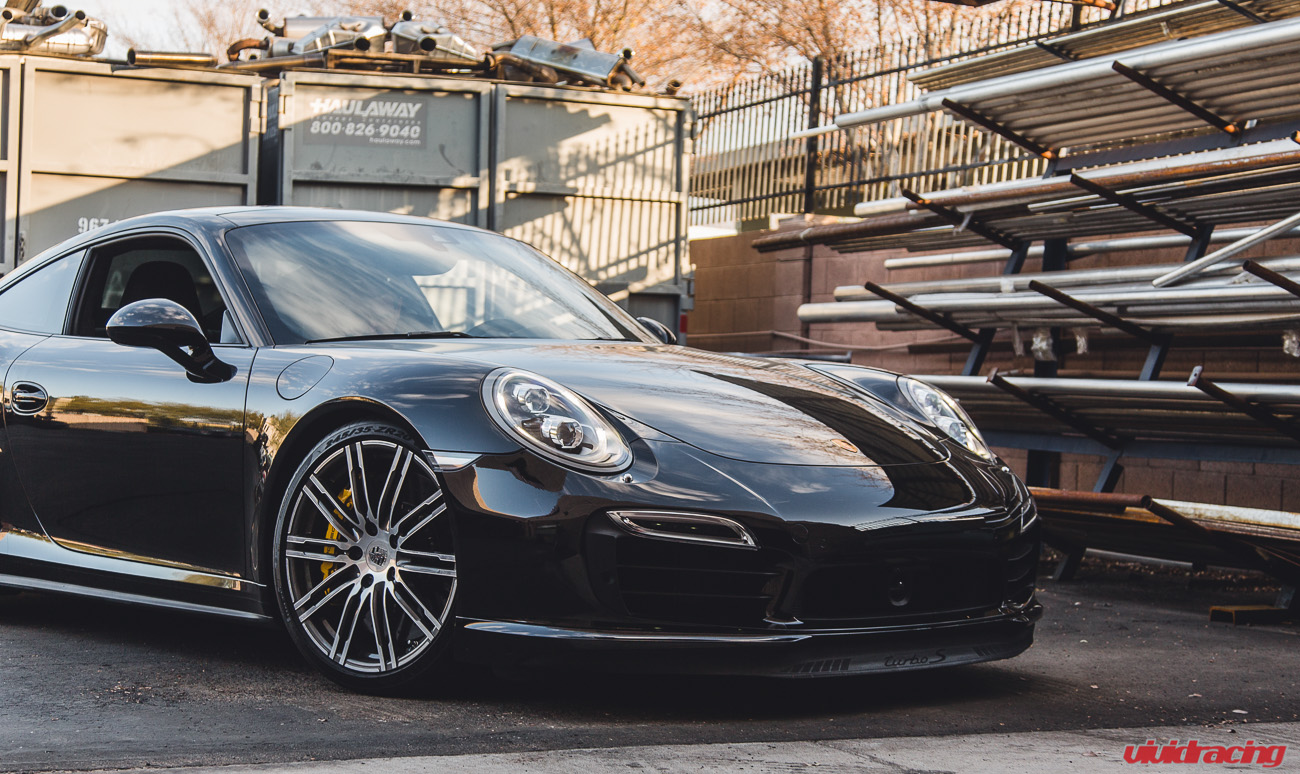
So we are definitely partial to the Porsche world. Â Having owned the 991 Turbo as a Project Car, we have developed some pretty nice products for this platform. Â We have also had the chance to test and compare others tuning and performance products as seen here. Â So when it comes to making power on the Porsche 991 Turbo, the formula is simply like many other Porsche Turbos or turbocharged cars, more air in, and more air out with the help of tuning. Â The Porsche 991 Turbo S already comes with 560hp, stronger than the 520hp 991 Turbo. Â The main difference between the 991 Turbo and Turbo S is simply the mapping. Â The rest of the performance parts are the same. Â So this means that the gains of the 991 Turbo S will be slightly less where both cars will achieve the same end goal performance number. Â This customer wanted to have the top level products on his vehicle. Â When it comes to our exhaust systems, our Agency Power products are nice, but Akrapovic is jewerly. Â At about 4 times the price, it better be! Â The titanium muffler works inconjunction with the stock cat pipes or the aftermarket titanium high flow cats this customer purchased. Â The exhaust does not retain the factory tips but includes new oval tips with integrated carbon fiber exhaust surrounds. Â To take it up a notch, you can then get the full Akrapovic carbon fiber diffuser to make the full rear underside carbon fiber. Â The fit and finish of Akrapovic exhaust products has always been top quality and the carbon fiber work is 2 levels higher.
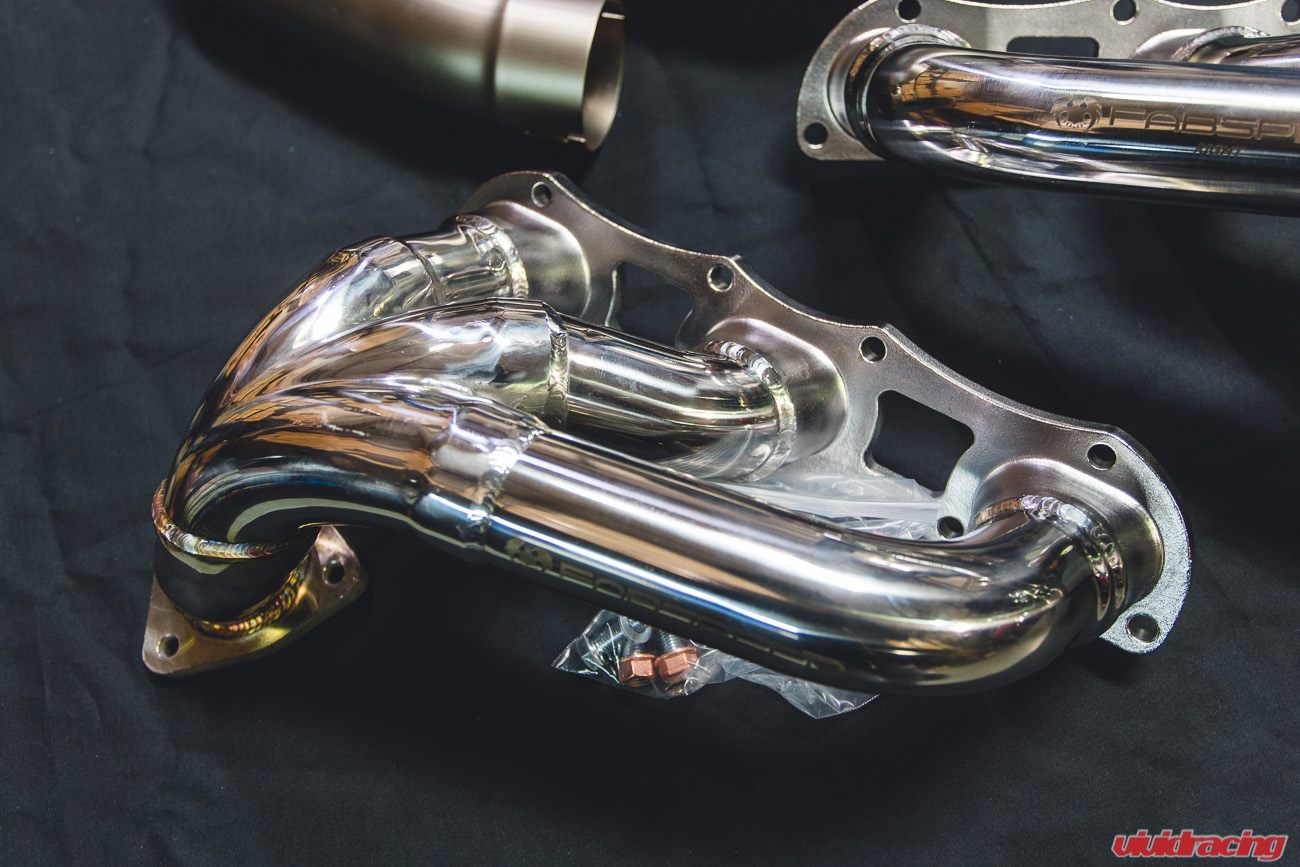
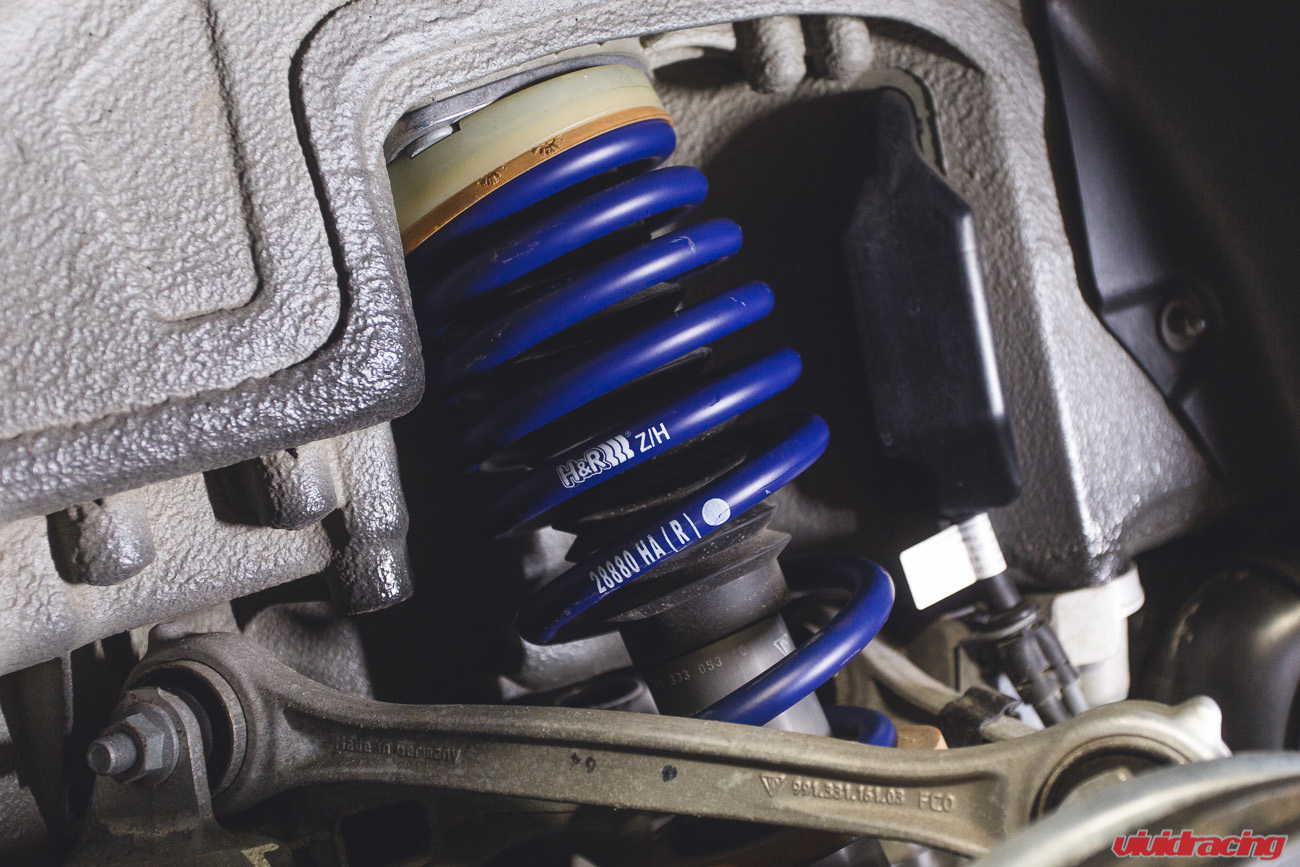
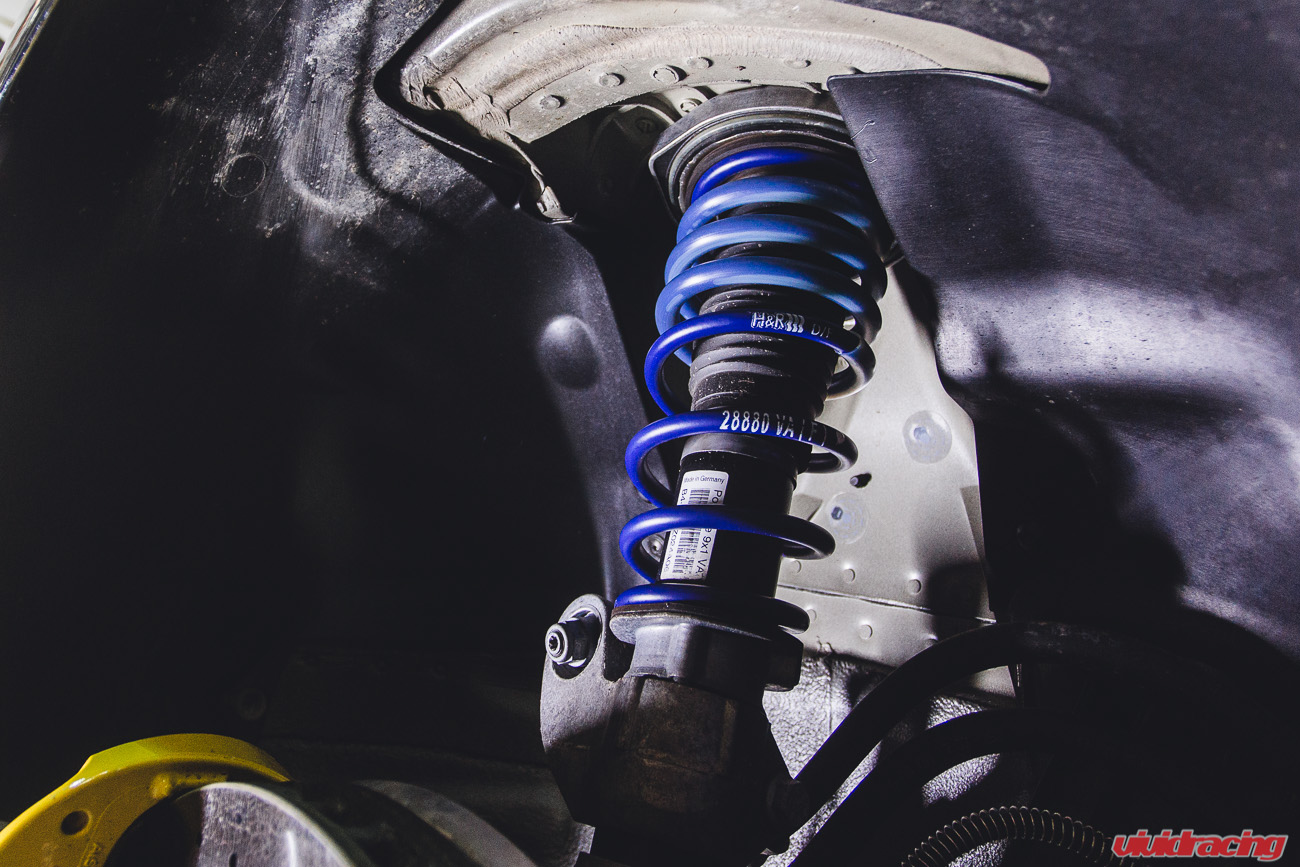
For more horsepower and faster turbo spool, we did a set of Fabspeed high flow headers. Â The headers are done as a 3 into 1 merged collector which are specific for the left and right bank of the engine. Â The new design is much improved over the factory “clam shell” design. Â The way each runner is designed is what helps the turbos spool up quicker. Â Headers are usually known for improving low end torque on the Porsche Turbos rather than top end power. Â Though the exhaust makes more noise and maybe around 20-25 horsepower, the turbos are nothing without some tuning. Â The Cobb Accessport has been a great upgrade for the Porsche 991 Turbo community using their OBDII port tool which allows you to load tuned maps, stage upgrade maps, get custom tuning, and even revert back to your original file. Â The Cobb AP3 even does datalogging and code clearing. Â The off the shelf Stage 1 and 2 maps are great for the 991 Turbo and Turbo S providing an increase of power as well as handling the high flow cat pipes. Â For some extra performance and air flow improvements, we also upgraded the stock air filter to a BMC Italian high flow air filter. Â This retains the factory box and lasts the lifetime of the car. Â Its filter element flows better while catching more bad particles. Â For style points, the car was lowered with H&R Springs much like we did on our Project 991 Turbo here.
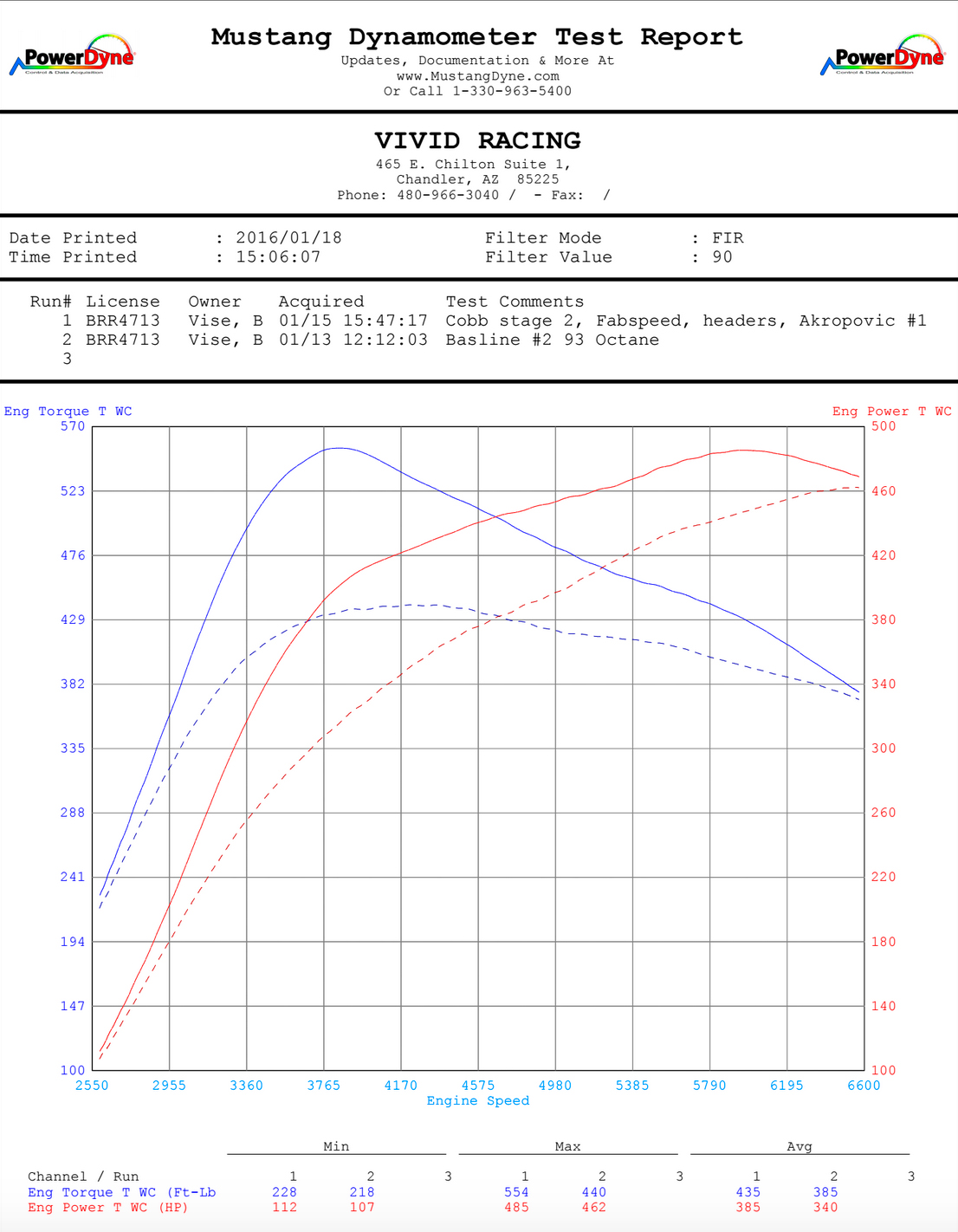
So to see where the performance was on this 991 Turbo S, we did a baseline and after mod comparison as well as compared it to our other Cobb Accessport Turbo S and our VR Tuned Tuning Box 991 Turbo. Â The baseline test, just a couple days prior, in similar conditions, on our Mustang AWD Dyno yielded 462 awhp and 440 ft/lbs of torque. Â The Mustang Dyno reads low with about a 20-25% drivetrain loss. Â At about 20% loss, this puts us pretty close to the factory 560 horsepower mark. Â After the mods we had massive gains in torque and strong gains in horsepower throughout the curve up until 6000 rpm. Â Torque went up nearly 110 ft/lbs over stock at 3700 rpm which is a tremendous increase. Â I would guess about 20 of that was from the headers. Â The horsepower did fall off at 6000 which could be do to heat even though the ambient temp was in the 60’sF and there was a mix to 93octane. Â Fans were a blazing on the intercoolers so it seems the top end could use a little custom adjustment. Â Horsepower gains was almost 80awhp at 4100rpm and kept to about a 60awhp gain till 6200rpm where it was about a 25awhp gain. Â The overall wheel horsepower numbers were 485awhp and 554ft/lbs of torque.
To validate these findings, we compared the results as we mentioned above in the 2nd dyno graph below.  The Cobb Accessport was pretty consistant between the 2 Turbo S cars we tried.  The pervious Turbo S as featured here, had the Agency Power Y-Pipe and Intake Kit along with a set of Agency Power headers.  It also had high flow cats and just muffler deletes by another company.  Its numbers were pretty on par with 474awhp and 536ft/lbs.  However looking at the test you could see the power and torque came in sooner with both tests being started at 2500rpm.  The 3rd dotted line is our original Project 991 Turbo with stock cats, AP exhaust, AP Headers, AP Intake and Y-Pipe, along with the VR Tuned.  We use this as a comparison all the time as this car ran very strong.  Its peak torque was slightly less at 548ft/lbs but had a slightly higher peak horsespower of 495awhp.  The big difference 4100 to 5800rpm where the VR Tuned has a slight advantage.  We know this as we raced our own car in the McLaren here!
Stayed tuned as we will be sharing another two Turbo S builds with one having the same mods as this car and the other as our Project 991 Turbo.  Enjoy the video and make sure to shop for all your Porsche parts at our Porsche Performance Store Here or call our specialists for Performance advice 1.480.966.3040.