Wednesday, April 11, 2018

Introducing the new HKS GTIII-RS Turbo Kit for FA20

The BRZ/86 is a popular car amongst enthusiasts for a variety of reasons, but most will agree that it’s underpowered. It’s not slow, but the chassis could handle more power, especially after improved suspension and sticky tires are added. There is only so much you can do with a naturally aspirated 2.0L engine that is pushing 100 horsepower per liter without adding forced induction to the mix. HKS is a huge name in the JDM market, and they’ve just released their GTIII-RS turbo kit for the FA20.

What’s special about this new turbo kit is the turbocharger itself. With a large turbocharger, you’ll have a ton of top end power because that’s where the turbo threshold will be. Unfortunately, a large turbo will be laggy and make your car terrible to drive on the street. Using the smallest and most efficient possible turbocharger to meet your power goals is ideal, as you’ll have great throttle response and a lot of low-end power which will make your car very street friendly. The GTIII-RS turbo kit focuses on providing the best possible throttle response by using a relatively small turbocharger with a lightweight billet compressor wheel.
Kit Includes:

  • GTIII-RS Turbocharger with wastewater actuator

  • Oil and water piping

  • Intercooler piping

  • Intercooler

  • Exhaust manifold and catless extension pipe

  • Heat shield

  • Gaskets, brackets, bolts


As you may be able to tell from the list above, this is nearly a complete kit. The fuel system and ECU tune will be left up to you, as everyone wants something a little bit different. As tested by HKS, a stock FA20 can make 350 horsepower with this kit and a built 2.1L stroker FA20 can make 450 horsepower. These are crazy power levels considering how responsive the GTIII-RS turbocharger is. If you’ve wanted to boost your FA20, then this is the perfect kit for you.

If you have any questions about HKS GTIII-RS Turbo Kit for BRZ/FRS/86 or would like to purchase parts for your car, please do not hesitate to contact us. We can be reached by phone at 1.480.966.3040 or via email at sales@vividracing.com.

[gallery size="full" ids="94346,94347,94348,94349,94350,94351"]

Can-Am X3 ECU Flash Comparison VR Tuned vs EVO Stage 3

There is always a debate on who has the best ECU flash for the 2018 Can-Am Maverick X3 RS.  There are many ways to test and compare the different tunes.  While some will try to cheat with fake drag races like an episode of Pinks, we test and compare ECU tunes in a controlled environment.  This is the only way to test.  Same car, same gas, same mods with the only variable being the tune.  But why do testing like this some may ask?  Why is there Coke vs Pepsi, Ford vs Chevy, and Taco Bell vs Del Taco?  Competition creates business and better products.  There is never one solution and just because someone may be first, does not mean they are best.

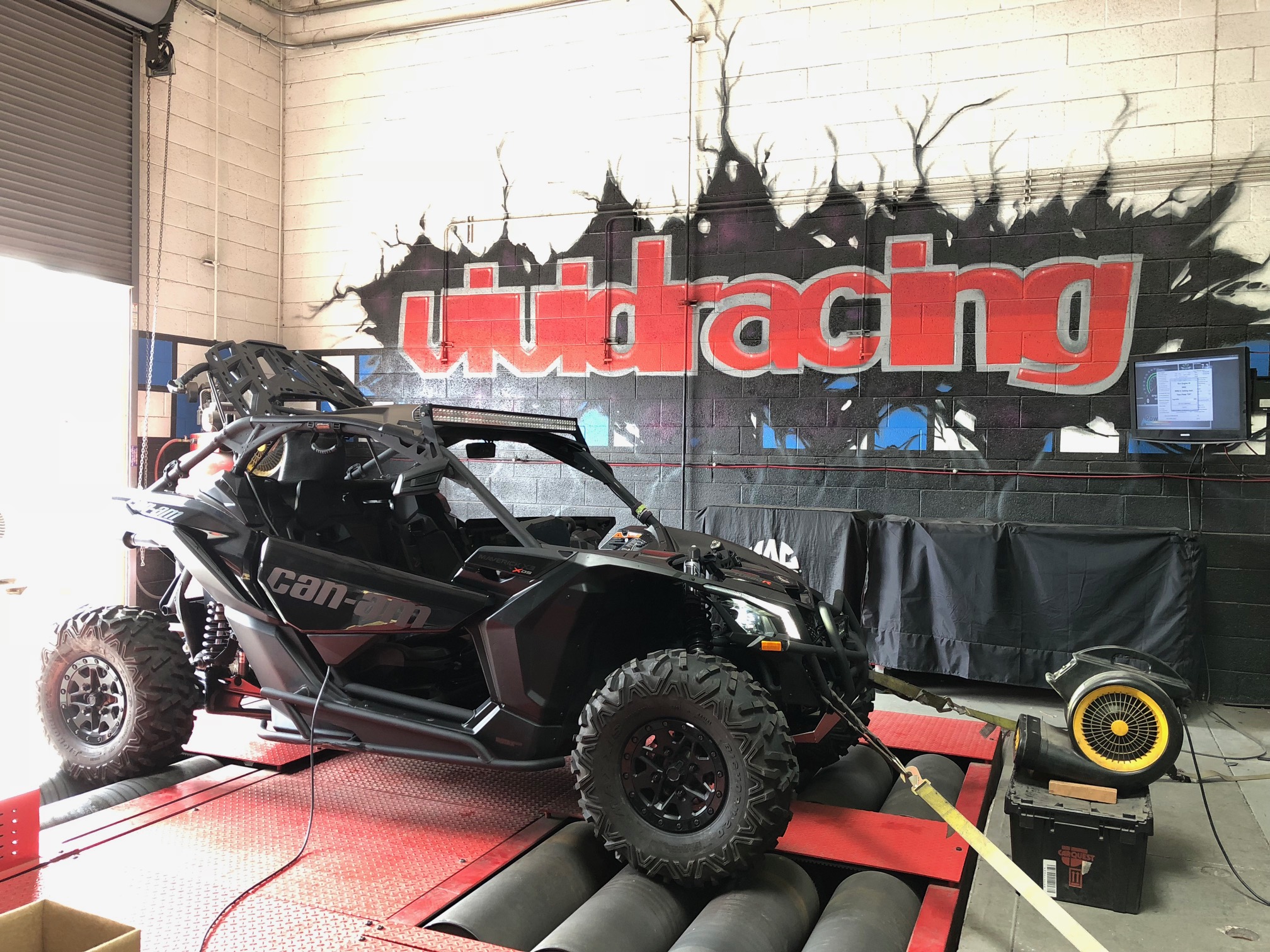
Starting in October 2016, Vivid Racing"s VR Tuned has been doing UTV ECU Tuning.  Besides real world testing and dyno sheets, we like to compare ourselves to other tunes to see where we place.  Names like Bikeman, Alba, RVS, PWR are all known in the Can-Am X3 tuning game.  However, one name that everyone brings up is EVO Powersports.  So we decided to get a 2018 Can-Am Maverick X3 DS with this tune and test it against our VR Tuned ECU Flash.  The car in question had a Gibson dual tip muffler exhaust, EVO intake, and KWI floating clutch setup.  The tests we ran were on our Mustang AWD Dyno here at our GIlbert, AZ facility running 91 octane.   Based on the Dyno Sheet times, there was about 2 hours in between runs.  Enough time to allow each car to run cool.  Our tests were done by MPH starting at 15mph and ending at 70mph.  70mph on the dyno computer is about 80mph on the car. 

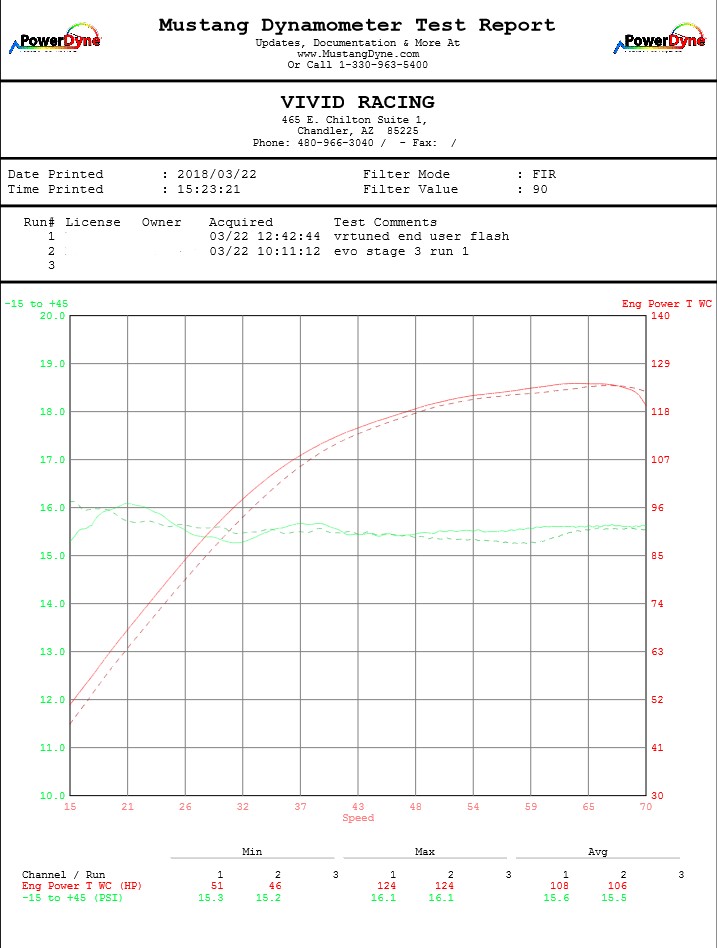
Looking at the dyno sheet, the solid line is the VR Tuned ECU Flash were the dotted line is the EVO Powersports Stage 3.  VR Tuned does not do stages as we give you the best file the first time.  A "stage" should not cost you extra money as you are gaining power from the bolt-ons you have done.  The only time you should need a new tune is if you go with different injectors, fuel pump, or turbocharger.  Both cars had a max peak power of 124 rear wheel horsepower while the VR Tuned flash made about 2-3 more horsepower from the bottom to the middle of the power curve.  This is due to timing, fuel, and limiter differences.  You can see the green line compares boost pressure.  Both vehicles had an average of around 15.6psi with a spike to 16.1.  The AFR which is not plotted showed both cars in the 11.3-11.6 range.  This is a tad rich but safe for any type of weather use.  The car could be leaned out to around 12-12.5 and see boost pressures of around 17psi for a larger increase.  

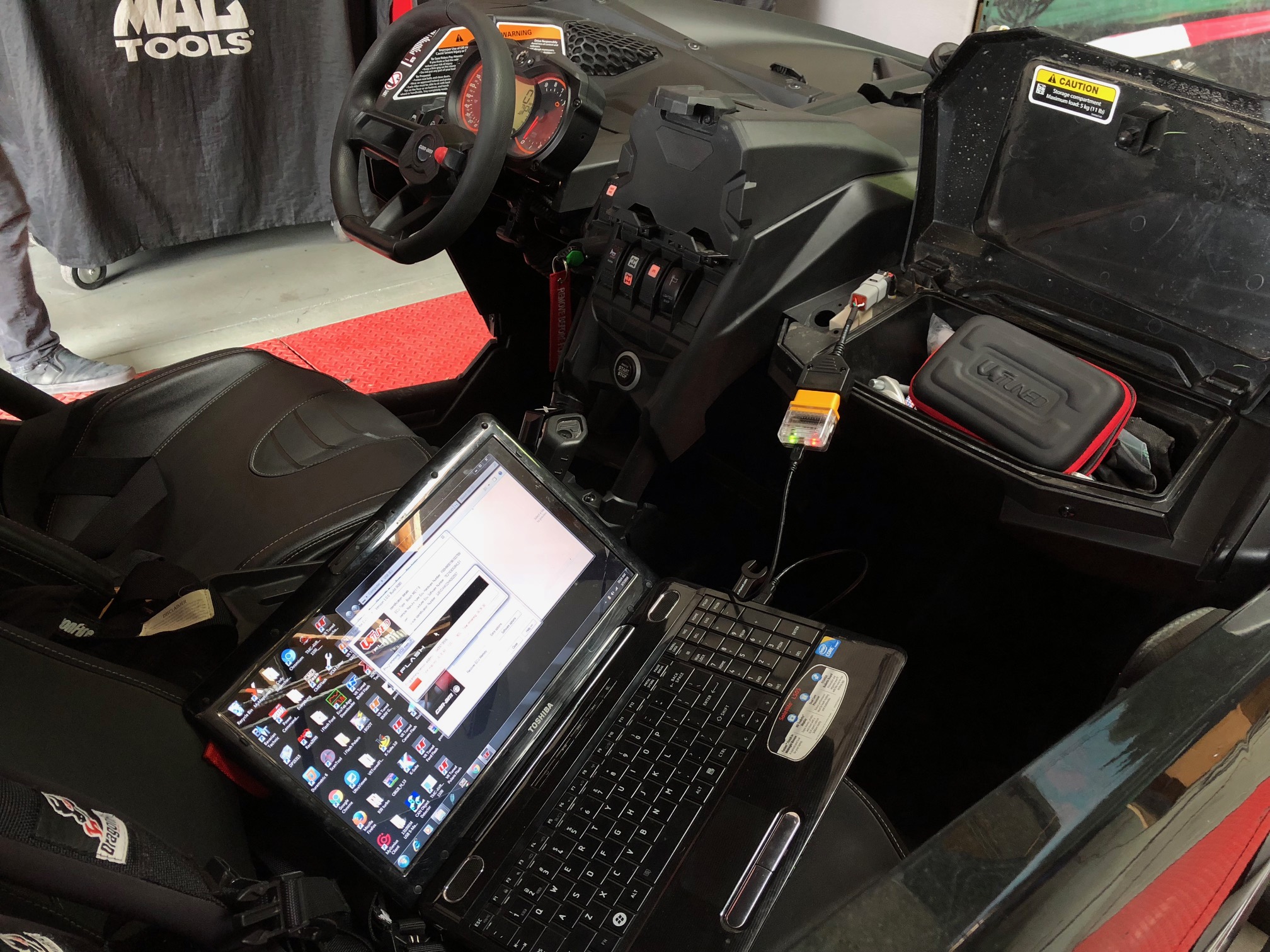
So how do you make a good purchasing decision for your Can-Am X3 tuning?  Customer service and reliability is extremely important.  Vivid Racing has 40 people available to assist with all types of questions and support.  We are available via Live Chat, Email, and Phone Monday to Friday.  We even get customers back files outside of normal business hours and weekends.  We have been in business Since 2001 with one company that has continually grown.  Our VR Tuned support and product is designed to ensure your experience is smooth and easy.  We are always on top of giving customers the best file the first time.  Our ECU Flash system is all done via the diagnostic port and a PC Windows tablet or laptop.  You don"t need to be connected to the internet, buy credits, or wait for an activation.  Our solution is extremely easy to use and allows you to flash between your tuned and stock files.  This is a great feature for those concerned with warranty.  More importantly, VR Tuned has never recalled any of it"s ECU tuning or had any catastrophic engine failures.  We focus on power with reliability!

View all our VR Tuned Can-Am ECU Tuning Here

See how our ECU Flashing System Works Here

Please Enjoy Our Other Comparison Articles:


Why the Valvetronic Dump Pipe is Better Than an Exhaust on the Can-Am X3

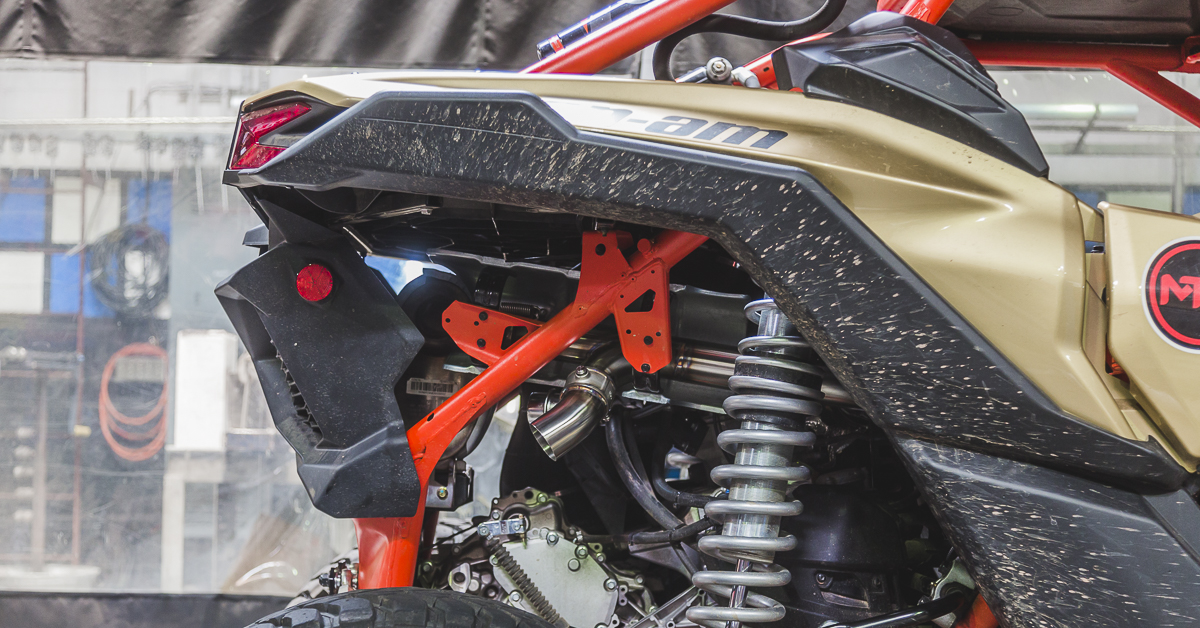
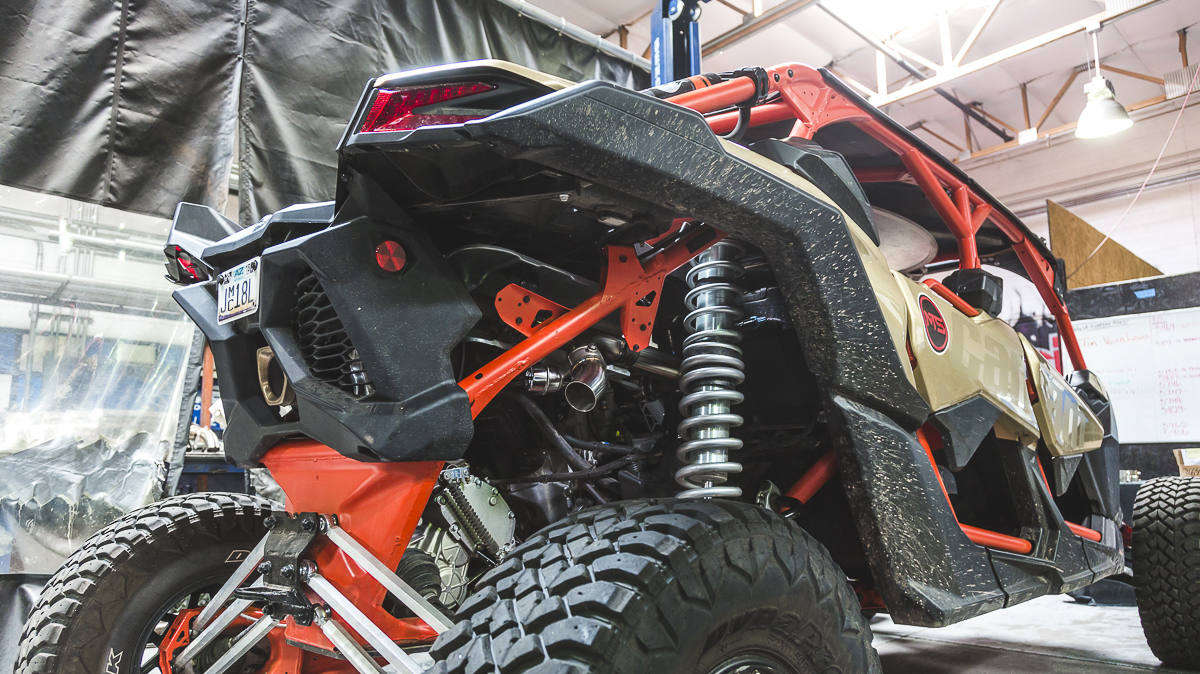
There are many options to choose from when it comes to an exhaust for your Can-Am Maverick X3 Turbo.  Between price, style, and sound, most exhausts will do the same for your upgrade desires.  However when it comes to performance, there is a different way to look at things.  When you do an ECU tune, you set boost pressure parameters in the ECU code.  This is typically set to about 17psi instead of the stock 14psi in our VR Tuned ECU flash and as we have tested in others.  What the ECU says and what the car will do can differ.  Mechanically, you have variables such as the wastegate, blow off valves, and exhaust components.  If we focus on the exhaust system, you can see there is some major variance.  If 1psi of boost equals 10 horsepower in theory, than this graph and article will show you why the Agency Power valvetronic dump pipe is the best option for your Can-Am X3 Turbo!

Turbochargers do not need any back pressure or restriction.  The more air you get in and the more air you get out makes them extremely happy.  If you put a simple 3 inch pipe off the turbo exhaust side, it would be happy as hell.  However your ears would not be.  A turbo is one big air pump and if you put a blockage on the exit of the turbo, it will not perform how it should.  Want to see?  Grab a hairdryer and put your hand in front of the opening.  Hear it about to explode?  That back pressure is restricting the flow.  However, Can-Am is not building race cars for the masses, they are building vehicles designed for the general population that meet government regulations.  With this, restrictions and audible requirements must be met.

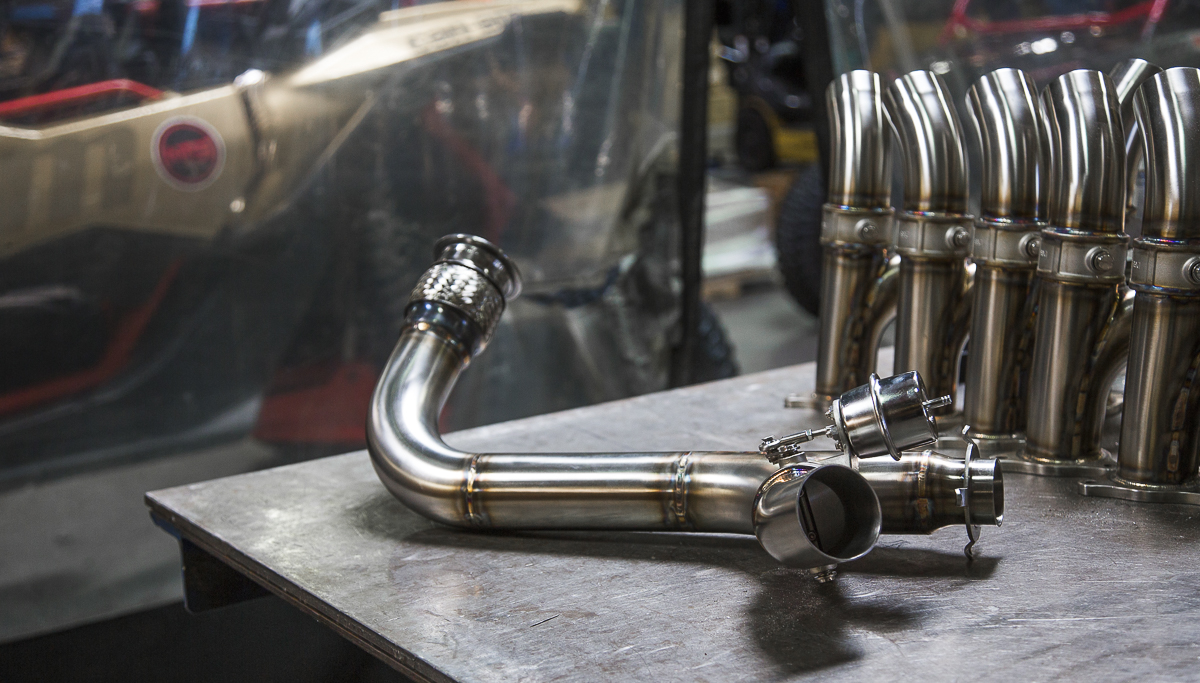
The Agency Power valvetronic race pipe features a valve that is switch operated from inside the cockpit.  When the valve is open, the exhaust gases from the turbo goes straight out the dump portion with no restriction or back pressure.  This gives a loud race sound that some truly prefer.  When it is closed, the exhaust gases go through the now catless pipe and into the stock or aftermarket muffler.  This keeps the exhaust tone tame and tolerable for most.  By not have a cat for race use, the restriction is eliminated, but not completely.  We plotted 3 different boost graphs to show you how the immediate atmosphere dump of the exhaust gases is better than the stock exhaust with a cat delete pipe or with an aftermarket exhaust.

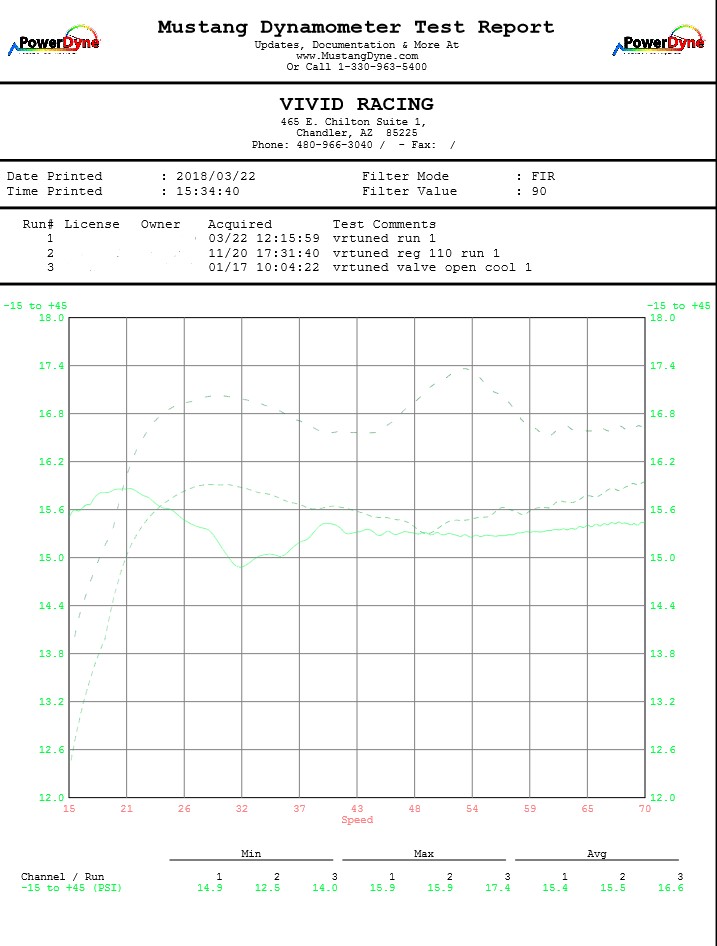
  • Run #1 is a stock muffler with cat delete pipe that averages 15.4psi

  • Run #2 is an aftermarket muffler with cat delete pipe that averages 15.5psi

  • Run #3 is the Agency Power valvetronic dump pipe that averages 16.6psi


Check out the Agency Power Valve Dump Pipe Here


Introducing Vortech Maxflow Intercooler Upgrade Package for EcoBoost F-150

Although there are a ton of EcoBoost F150 owners out there who love their truck, that doesn’t mean they don’t want to modify their truck. When air is compressed it heats up. If air becomes hot enough, it can ignite an air/fuel mixture without a spark. This is known as detonation or pre-ignition, and it’s not something you want happening inside your engine. Unfortunately, it is an inherent problem with turbocharged engines, especially ones that run high boost levels like the 3.5L EcoBoost. The intercooler’s job is to cool down hot compressed air before it enters the engine. Although the stock intercooler does a decent job, an aftermarket intercooler could do an even better job. You can read more about how an aftermarket intercooler will help your engine in our Intercooler Guide article.

Although Vortech is best known for their superchargers, they cover all segments of the forced induction aftermarket. They’ve just released their Maxflow Intercooler for the 3.5L EcoBoost F-150 and now it’s available through Vivid Racing. This intercooler has a 75% increase in frontal area with a 200% increase in overall core volume. The result is lower and more consistent charge air temperatures, ultimately leading to a 26% peak power gain with 18% over gains at the wheels. This power gain, of course, depends on if you purchase the intercooler with the tuner or not.

With or without the tuner, your truck will be much happier with lower and more consistent charge air temperatures. If you have any questions or would like to purchase a Vortech Maxflow Intercooler for 3.5L EcoBoost F-150, please do not hesitate to contact us. We can be reached by phone at 1.480.966.3040 or via email at sales@vividracing.com.

[gallery columns="2" size="full" ids="94336,94337,94338,94339"]

Tuesday, April 10, 2018

Cast Wheels vs Forged Wheels: What"s the Real Difference

The automotive aftermarket is filled with a massive array of parts manufacturers, some of them much better than others. Of course, at Vivid Racing, we only offer products that we believe in and know our customers will be happy with; this is why popular wheel brands like Rota aren’t on our website. When it comes to aftermarket wheels, there are two major manufacturing processes: forged wheels and cast wheels. Almost all cheaper wheels will use a "cast" design while high-end wheels, such as Forgeline, strictly using a "forged" design. Unfortunately, many enthusiasts do not understand the difference between a cast wheel and a forged wheel, and they end up purchasing something not-quite-right for their needs.

Cast Wheels

A cast wheel is made by pouring molten aluminum into a mold where it is formed to the correct shape and sits there until it cools down. Once the wheel cools down, trimming and drilling are performed. Unfortunately, there is one massive flaw with this method of producing wheels: porosity. Porosity is the physical space inside the material once it has cooled, and it allows for weak points to form. The cheapest workaround for this problem is to use larger tolerances, ultimately making the wheel heavier. This method of wheel manufacturing is very quick and cheap, allowing for mass production of cheap wheels.

Contrary to what some enthusiasts will tell you, cast wheels are not terrible. A properly built cast wheel will indeed weigh more than a forged wheel, but the build quality is typically more than enough for street use and light track use. Heavy track usage is where you’ll see low-quality cast wheels (often replica wheels) fail, resulting in an ugly crash. A high-quality cast wheel will survive heavy track usage, but the heavier design it not ideal.

Forged Wheels

Unlike cast wheels, forged wheels begin their life as a solid piece metal which is referred to as billet. This solid piece undergoes massive amounts of heat and pressure to form it into the desired shape which is used for different wheel designs. Once this desired shape has been achieved, the forging is placed in a CNC machine where is machined into the exact shape needed.

As we mentioned above, cast wheels are inherently porous; forged wheels aren’t thanks to the heat and pressure they undergo. That strength allows for less material to be used to achieve the desired structural integrity, resulting in a significantly lighter wheel. Often time forged wheels use a “monoblock” design, but they can also use a two-piece or three-piece design which allows for greater fitment flexibility.

Flow Form Wheels

If you’re a wheel nerd like we are, then you probably know there is a middle ground between cast and forged: flow form/flow forged. This starts with a cast wheel that is purposely made narrower than desired. The wheel is then stuck on a machine that spins the wheel while pressing steel roller against the rim area, which compresses and stretches the barrel of the wheel, resulting in forged-like barrel strength and weight. As you may imagine, wheels built using this process fall between the cost of a cast and forged wheel.

Summary

Understand that this is a very brief overview of the topic and there is a lot left that we didn’t talk about such as load ratings and elongation. To summarize, remember that cast wheels are cheap but good enough for street use, forged wheels are expensive but will hold up to anything you throw at them, and flow formed wheels are between cast and forged.

Check out some of our most popular wheel brands

Monday, April 9, 2018

Vortech Superchargers Releases 2018 5.0L Mustang GT Tuner Kits

Although the Gen III Coyote engine is relatively new, it’s already been discovered that it is, by far, the best Coyote engine yet. Straight from the factory is makes an impressive 460 horsepower and 420 lb-ft of torque. Like the Coyote engines before it, the Gen III responds great to bolt on parts and even better to forced induction. Vortech is the first company on the market to offer a supercharger kit designed specifically for the Gen III and now this kit is available through Vivid Racing. If you are looking for a complete kit that has absolutely everything you need, then you’ll have to wait a little bit longer because this kit is a “tuner” kit. Vortech’s tuner kits require you to choose your own fueling system (aftermarket injectors and fuel pump) and ECU tune, but this can be done pretty easily. The benefit of a tuner kit is more flexibility and customizability.

Being a tuner kit, there isn’t any official horsepower number you can expect after installation. Depending on the fuel you use, tune, boost, and any other mods, horsepower will vary. Of course, bolt on modifications such as a full exhaust will increase horsepower even further. If you decide to go absolutely crazy with your Mustang, you’ll be glad to hear this supercharger support up 1000 horsepower with supporting mods. With the stock pulley, this blower will make anywhere from 7.5 to 8.5 psi at redline on the stock engine. These kits are the first kits to use the Vortech V-3 JT Supercharged, which is a high efficiency self-lubricated centrifugal supercharger.

Included with the kit is an air to air charge cooler which will allow charge air temperature to stay consistent, resulting in less heat soak and the possibility of more horsepower depending on your tune. Also included is a 98mm MAF housing with is configured for a “blow-through” setup. The included air inlet duct will work perfectly with the stock air box and it will also work with select aftermarket air intakes. The supercharger itself will be available in Satin, Polished, or Black, with the Satin kit coming in around $200 cheaper than the others.

If you have any questions about Vortech Tuner Kit for 2018 Mustang GT 5.0L or would like to purchase parts for your Mustang, please do not hesitate to contact us. We can be reached by phone at 1.480.966.3040 or via email at sales@vividracing.com.

[gallery columns="2" size="full" ids="94323,94322,94320,94321"]

New Wheel Design: Brixton Forged PF7

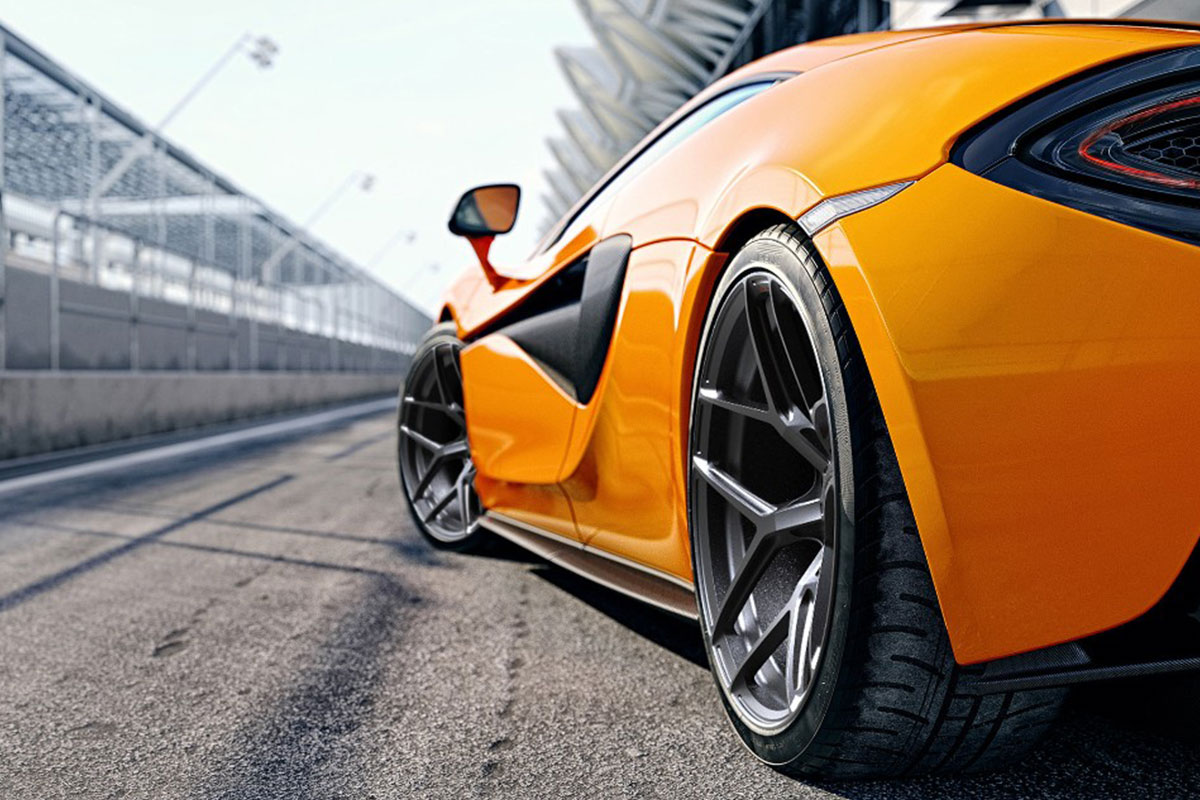
If you’re into high-end cars and high-end wheels, then you’ve probably heard of Brixton Forged. They’re known for their high quality, yet still affordable wheels. Just recently, they unveiled their new PF7 wheel which is designed for SUVs, sports cars, exotic cars, and even track usage. Everything about the wheel is designed to be as lightweight as possible which reduces rotating mass; ultimately a lighter wheel will help your vehicle accelerate, turn, and stop better.

Like many modern performance-oriented wheels, the PF7 feature backed pocketing which helps save weight with compromising strength. The two and three-piece versions of the PF7 wheel use full titanium hardware for excellent strength and longevity, plus titanium hardware is significantly lighter than stainless steel hardware. The three-piece version of the PF7 has floating spoke ends, a design feature that has become extremely popular with high-end cars. The entire wheel is made from 6061-T6 aerospace grade aluminum which reduces weight further and provides great strength.

The actual design of the wheel is something like a split five-spoke, but with a little bit of flare thrown into the mix. It’s a design that could look good on pretty much any car or SUV. Available sizes range from 18” to 24” depending on the variant of the wheel (one piece, two piece, three piece). Widths range 6” to 16”. These wheels are bespoke, meaning they are available in any lug pattern or offset, allowing you to have a wheel tailored to your exact vehicle and style.

If you have any questions about Brixton Forged PF7 or would like to purchase wheels for your car, please do not hesitate to contact us. We can be reached by phone at 1.480.966.3040 or via email at sales@vividracing.com.

[gallery columns="2" size="full" ids="94294,94295,94296,94297"]